
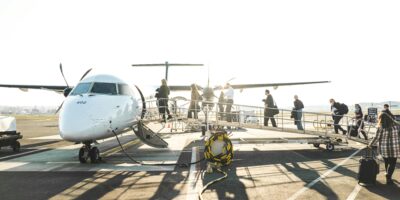
I was thinking about this on a recent flight when I watched the ground crew go through their pre-departure routine — checking the tarmac, inspecting the aircraft, coordinating with the tower. It hit me that there are hundreds of safety-related things happening at an airport at any given moment that most passengers never see or think about. And honestly, that’s kind of the point. When airport safety works, you don’t notice it.
Protecting Human Life
The reason is that it’s the most fundamental reason airport safety matters. Airports move enormous numbers of people through a relatively small space, and those people are surrounded by heavy machinery, jet fuel, high-speed vehicles, and aircraft that weigh hundreds of thousands of pounds. The potential for things to go wrong is significant, and the safety protocols exist to keep that potential in check.
I’m talking about everything from runway inspection routines that check for debris and surface damage, to the fire and rescue crews that sit on standby during every takeoff and landing. There are wildlife management programs to reduce bird strikes, weather monitoring systems that can shut down operations when conditions get dangerous, and maintenance standards for every piece of equipment on the airfield. None of this is glamorous work, but it’s the reason air travel has such an impressive safety record. When I think about the fact that millions of people fly every single day and serious incidents are extremely rare, that’s not luck — that’s the result of thousands of safety systems working as intended.
Passenger safety inside the terminal matters too. Crowd management during peak travel times, emergency evacuation procedures, fire suppression systems, structural engineering standards — it all adds up. You probably don’t think about the fire sprinkler system in the ceiling of Terminal B, but someone designed it, someone installed it, and someone tests it regularly. That quiet diligence keeps people safe.
Maintaining Operational Efficiency
Here’s something I didn’t fully appreciate until I started paying attention: safety and efficiency aren’t opposing forces at airports. They actually depend on each other. When safety protocols are solid, operations run smoother. When they break down, everything grinds to a halt.
Think about what happens when there’s a security breach at an airport — a terminal gets evacuated, flights get delayed or cancelled, thousands of passengers are stranded, and it takes hours to get things back to normal. One incident can cascade through the entire air traffic system. I was at Newark once when they evacuated a terminal because someone went through an exit door the wrong way. My flight was delayed four hours. Four hours because someone walked through a door. That’s how tightly wound the system is, and that’s why the safety measures exist — not just to prevent disasters, but to keep the daily operation moving.
Runway safety is another example. The protocols around runway incursions — where an aircraft or vehicle enters a runway without authorization — are strict because even a minor incursion can shut down operations and create dangerous situations. The procedures for taxiing, holding short, and crossing runways exist to maintain flow as much as to prevent collisions. Safety is what makes the whole orchestrated chaos of a busy airport actually work.
Security Against Threats
This is the one most people think of first, and for good reason. Airports are high-profile targets, and the security infrastructure exists to address that reality. Passenger screening, baggage scanning, behavioral detection, perimeter security, law enforcement presence, intelligence coordination — it’s a layered system designed so that if one layer misses something, the next one catches it.
I know a lot of people find airport security annoying. I get it — taking off your shoes, pulling out your laptop, standing in line. It’s not fun. But the alternative is worse. The security measures we have now are the product of lessons learned from real incidents, and they’ve prevented a lot of things that never made the news precisely because they were stopped. I’m not saying the system is perfect or that every rule makes obvious sense to the person standing in line. But the overall framework exists for real reasons, and it’s adapted over time as threats have evolved.
Cybersecurity is becoming a bigger part of this too. Airports run on interconnected digital systems — flight operations, baggage handling, access control, communications. A cyberattack on airport infrastructure could be genuinely disruptive. Wait, actually, “could be” undersells it — there have already been incidents at airports around the world involving ransomware and system intrusions. The investment in cybersecurity at airports has increased significantly in recent years, and it needs to keep growing.
Economic Stability
When an airport’s safety record takes a hit, the economic consequences spread fast. Airlines reconsider routes. Passengers avoid the airport. Insurance costs go up. Business travelers — who tend to spend more and fly more frequently — are especially sensitive to safety perceptions. A single serious incident can damage an airport’s reputation for years, and that reputation directly affects how many airlines want to operate there and how many passengers choose to fly through it.
On the flip side, a strong safety record attracts business. Airlines want to fly into airports that run well and keep incidents low. Cargo operators want reliable facilities where their shipments won’t get delayed by preventable safety issues. The economic argument for airport safety isn’t abstract — it shows up in route decisions, investment, and revenue. That’s what makes airport safety valuable to the finance people, if nothing else — it directly protects the bottom line.
Public Trust and Confidence
This one ties everything together. People fly because they trust the system. If that trust erodes — because of a high-profile incident, a pattern of security failures, or even just a perception that things aren’t being managed well — people fly less. And when people fly less, everything downstream suffers: airlines, airports, tourism, local economies.
Maintaining public trust means being transparent about safety measures, responding effectively when things go wrong, and consistently demonstrating that the system works. It also means adapting. Passengers today expect different things than they did twenty years ago — they want to see the technology working, they want clear communication during disruptions, and they want to feel like someone competent is in charge. Airports that invest in visible, effective safety measures tend to score higher in passenger satisfaction surveys, which feeds back into their reputation and their bottom line.
I’ll be honest, I used to take airport safety for granted. You show up, you go through security, you get on the plane, you don’t think about it. But once I started noticing all the things happening in the background — the runway checks, the emergency drills, the security layers, the maintenance routines — I developed a real respect for how much work goes into making it all look easy. It’s one of those things where the better it works, the less you notice it. And right now, by and large, it works pretty well.



Stay in the loop
Get the latest airport pin updates delivered to your inbox.