STL Airport — What You Actually Need to Know
Flying out of St. Louis Lambert has gotten less clear-cut with all the outdated advice flying around. Every guide I’ve stumbled across reads like someone copy-pasted the airport’s press kit, added a list of restaurants that may or may not still exist, and called it journalism. As someone who flies out of STL several times a month for work, I got hands-on with this airport the hard way — through missed connections, wrong terminals, and standing in a rideshare lot at 10pm wondering where my Uber was supposed to materialize. So here’s what I’d actually tell you.
The Layout — Which Terminal You’re Actually In
STL has two terminals. Terminal 1 and Terminal 2. Sounds simple. It’s not — at least not if you don’t know the one thing that will ruin your morning: they’re not connected landside. Once your driver pulls away, you’re committed to wherever you got dropped off. You can move between terminals airside after clearing security, but if you’re on the wrong side of the building before that? You’re either calling another car or you’re sprinting through a bureaucratic detour you didn’t budget for.
Terminal 1 is where almost everyone is going. Southwest, American, Delta, United — all Terminal 1. Terminal 2 is essentially Concourse C and handles a narrower set of carriers. Check your boarding pass before your driver pulls away. Seriously, just look at it. The terminal is printed right there and takes maybe four seconds to confirm. Don’t repeat what I did — I assumed Terminal 1 during a 6:15am departure, was wrong, and lost 25 minutes plus nearly missed boarding entirely.
Between 7 and 9am, Terminal 1’s ticketing hall gets genuinely congested around bag drop. The Southwest counter especially — it handles volume that surprises people given the airport’s overall footprint. If you’re checking a bag during that window, build in a real buffer. Not an “I’ll probably be fine” buffer. Forty-five minutes before your flight isn’t enough. I’d say an hour, minimum.
Security — Where the Line Actually Moves
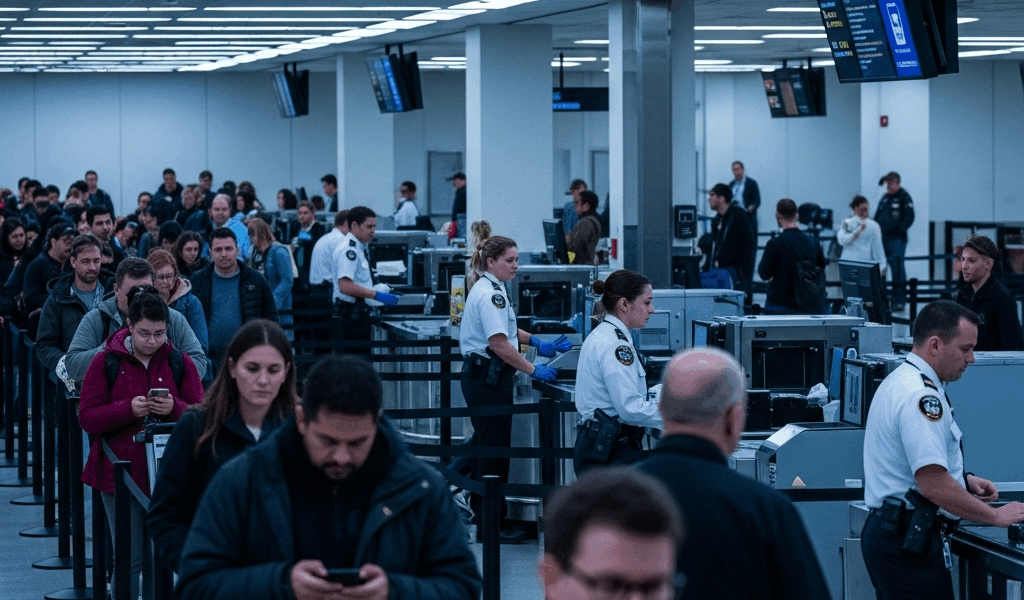
STL does not have CLEAR. First thing to know. Your expedited options are PreCheck and PreCheck only. The TSA PreCheck lanes in Terminal 1 sit near the Concourse C/D split — and they move. When standard lanes are stacked at 7:30am, PreCheck is usually five or six people deep. That gap is real and it compounds fast when you’re running late.
I’ll take a position here: if you fly out of STL more than four times a year, PreCheck pays for itself in recovered sanity alone. It’s $78 for five years — works out to roughly $15 annually. The math isn’t complicated, honestly.
STL security isn’t ORD. It isn’t ATL. But it’s also not the sleepy regional operation people who haven’t flown from here recently seem to picture. The 6–9am push is real. Standard lanes can run 25–35 minutes during peak hours — so plan accordingly rather than assuming you’ll coast through because it’s not Chicago.
Terminal 2’s checkpoint is a separate, smaller operation. If you’re flying out of Terminal 2, your security experience is usually noticeably calmer — shorter line, fewer people who forgot to take their laptops out, less ambient chaos. That’s not a reason to wish your airline was there. But it’s worth knowing if it actually is.
Food Before and After Security — What’s Actually Open
Quick note before the rest of this. It’s where every airport guide consistently fails travelers.
Pre-security food at STL is limited — mostly concentrated in Terminal 1’s main hall. There’s a coffee and grab-and-go setup near the entrance that functions before the rest of the building wakes up. But if you’re catching a 6am flight and you think you’re getting a sit-down breakfast before security, recalibrate. You’re not. You’re getting a coffee and maybe a wrapped sandwich if they’ve restocked overnight.
My honest recommendation: don’t eat before security on early departures. Go through, get to your gate, then eat. Concourses C and E have the widest airside variety and start opening earlier than the pre-security spots do. At 5:45am you might have one real choice. By 6:30am, you have several — and they’re better choices.
For layovers in the two-hour range, airside dining in Concourse E is where I’d point you. More useful for an actual meal rather than a snack. Concourse C skews toward quick service. I won’t name specific vendors because those change — a restaurant that existed eight months ago might be a completely different concept today, and a guide that sends you to a shuttered stall is worse than no guide at all.
The broader truth about STL food is that it’s airport food. It’s not a destination. Eat something real before you arrive if you’ve got a 5am departure, and you’ll be fine. Midday flights? The airside options are genuinely adequate.
Getting There and Getting Out — Ground Transportation Realities
Frustrated by a $40 rideshare quote one afternoon, I finally tried the MetroLink — and apparently most travelers just never think to. The light rail stop sits directly inside the airport. Not a shuttle, not a long walk — right there. It runs to downtown St. Louis in roughly 35 minutes for under $5. If you’re heading to the central business district, the Convention Center area, or Clayton, this is legitimately the smartest option available. You do need to check the departure schedule rather than just showing up, but that’s a minor adjustment once you’ve done it once.
Rideshare pickup — Uber and Lyft — is not curbside at baggage claim. This surprises a lot of people, including me the first time I arrived late on a Tuesday night expecting a car at the curb. Pickup is in a designated rideshare lot requiring a short walk from baggage claim — maybe three to five minutes depending on which exit you use. Not a big deal once you know it. A mildly disorienting surprise when you don’t.
On parking — the logic is straightforward. Gone for two days or less? The garage is worth the rate difference for the proximity. Gone three days or more? Economy lot is the play. The shuttle runs regularly and adds maybe ten minutes to your exit. Over several days, the cost gap is meaningful. I won’t quote specific prices here because STL updates their rates and I’d rather give you logic that holds than numbers that go stale by next month.
The Stuff Nobody Mentions Until You Need It
Stranded once at STL waiting on a delayed connection — a two-hour delay, middle seat in a gate area with one working outlet — I started cataloging the things I wished someone had told me before I started flying through here regularly. Here’s what actually made the list.
There’s a nursing room airside in Terminal 1. It exists, it’s accessible, and if you need it, now you know where to look. There’s also a USO lounge — if you’re active duty or a veteran, it’s worth knowing about, because it’s one of the genuinely quiet spaces in an airport that doesn’t have many of those.
The cell phone waiting lot sits on the north side of the airport. You get up to 45 minutes before a warning to move. Set your timer when you pull in rather than watching the clock nervously — it’s just easier.
Rental cars at STL are not at the terminal. There’s a consolidated rental car center that requires a shuttle from baggage claim. That shuttle runs on its own schedule — it’s not on-demand. Factor in 15 to 20 extra minutes when planning your pickup, especially if you have somewhere to be right after landing. I’ve watched people book cars assuming they’d be driving within ten minutes of touching down. It doesn’t work that way here.
Here’s what I’d leave you with: STL is genuinely easier than people expect once you understand how it works. It’s not O’Hare. It’s not the anxiety machine that certain major hubs have become. The lines move. The layout is manageable. The MetroLink is a real option that most travelers walk right past. Know the friction points going in — the terminal drop-off situation, the early food limitations, the rideshare lot walk, the rental car shuttle — and none of them are actually problems. They’re just things to account for. That’s a pretty good deal for a major airport.


Stay in the loop
Get the latest airport pin updates delivered to your inbox.