The Name That Should Have Been the Code
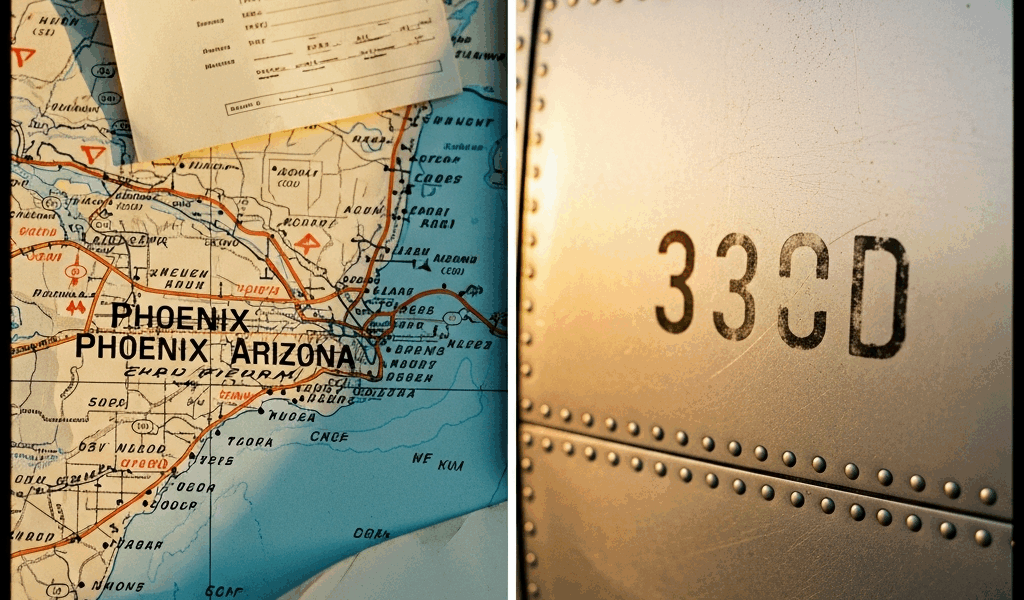
Airport codes have shifted noticeably with all the rebranding and renaming flying around. Phoenix Sky Harbor uses PHX because major airport codes generally identify the city they serve rather than reproducing the airport’s full name.
I noticed the disconnect the first time I booked a ticket there. Sky Harbor — honestly one of the best airport names in the country — and then the code is just… PHX. A city abbreviation. It’s like naming your restaurant The Golden Fork and putting a spoon on the sign. The tension bothered me enough that I actually went looking for answers. Turns out, there’s a genuinely satisfying reason hiding inside the question.
How Airport Codes Actually Get Assigned
But what is an IATA code? In essence, it’s a three-letter location identifier managed by the International Air Transport Association for commercial aviation. But it’s much more than that — it’s a city-first system, not an airport-first one. That distinction matters here. The starting point is always the city being served, not whatever name an airport slaps on its terminal doors.
Codes work on a first-come, first-served basis inside a shared global pool. Once a code is taken, it’s taken — no appeals process, no exceptions for bigger airports. There’s also a separate four-letter ICAO system used for flight operations and air traffic control. For baggage tags, departure boards, and ticketing though, IATA codes are what matter. And IATA defaults to geography first, always.
Early aviation ran on teletype systems where brevity was functional. Not aesthetic — functional. Shorter city-based codes moved faster across wire communications. A code representing Phoenix needed to be stable, unambiguous, tied to a place. PHX checked every one of those boxes. So PHX it became.
Why PHX and Not SKY — or AZP or PHO
Here’s the part that settled it for me. SKY is already taken. Griffing Sandusky Airport in Sandusky, Ohio — a small regional airport with a primary strip around 3,500 feet — claimed SKY decades ago and still holds it. IATA codes don’t get reassigned just because a bigger airport wants them. First assignment holds, full stop.
Stranded in a connection delay at Terminal 4 back in 2019, I spent roughly twenty minutes going down this exact rabbit hole on my phone. I’d assumed SKY was just sitting unused, maybe reserved. Nope. A small Ohio airport had it locked down long before Phoenix Sky Harbor’s coding was ever really a question. Is worth putting first that fact, honestly — it’s the satisfying answer hiding inside the bigger mystery.
So SKY was off the table entirely. That alone solves most of it. But PHX specifically beat out alternatives like PHO or AZP for straightforward reasons. P-H-X maps directly onto Phoenix with zero ambiguity — no interpretation required. PHO introduces a vowel that doesn’t anchor cleanly in teletype shorthand. AZP pulls from Arizona and Phoenix combined, which sounds clever but creates exactly the kind of regional ambiguity the system tries to avoid. Is that Tucson? Flagstaff? The state abbreviation muddies everything. PHX is unmistakably Phoenix. Done.
Sky Harbor’s History and Why the Name Stuck
Phoenix Sky Harbor International Airport opened in 1935. The name Sky Harbor wasn’t accidental — it was chosen to project genuine optimism about aviation’s future, positioning Phoenix as a city that took flight seriously. “Harbor” suggested shelter and arrival, a welcoming port for aircraft. The aspirational name reflected the optimism surrounding commercial aviation at the time.
It worked, maybe better than anyone expected. The name became part of Phoenix’s identity in a way that outlasted any functional purpose it might have served as a code. Through the expansions of the 1950s and 1960s, through the growth into its current three-terminal footprint — handling over 40 million passengers annually at pre-pandemic peak — Sky Harbor remained the name everyone used. Not Phoenix International. Not PHX Airport. Sky Harbor.
The code never matched the name. The name never needed the code’s validation. That’s a genuinely rare outcome in aviation — most airports are known by their codes or their city names. Sky Harbor became known by its own specific identity, independent of both.
Other Airports Where the Name and Code Do Not Match
Phoenix isn’t alone here. The gap between an airport’s official name and its IATA code is more common than most travelers realize. So, without further ado, let’s dive in.
- MCO — Orlando International Airport. MCO stands for McCoy — the name of the Air Force base that previously occupied the site. The airport was renamed Orlando International in 1976, but the code never followed. Disney fans booking their first Walt Disney World trip sometimes go hunting for DIS or OIA. Neither exists. Don’t make that mistake.
- ORD — Chicago O’Hare International Airport. ORD comes from Orchard Field, the airport’s original name before it was renamed in 1949 to honor World War II fighter pilot Edward “Butch” O’Hare. The code was already embedded in airline systems by then — changing it would have been an operational disaster. So ORD stayed.
- EWR — Newark Liberty International Airport. This one at least pulls from the city name. But travelers booking flights into New York expect JFK or LGA and get confused when EWR appears in results. Newark sits in New Jersey, the code reflects that geography, and the “Liberty” portion of the name doesn’t show up anywhere in the identifier — not even a little.
The pattern across all of these — PHX included — is the same. Codes reflect geography and the history of assignment. Not marketing language, not beautiful names, not civic pride. Sky Harbor is a genuinely great name. PHX is the code that made operational sense when it mattered. I’m apparently the kind of person who spends layovers researching this stuff, and honestly, that Sandusky detail works for me every time while a simple “it just works that way” never quite did. Both answers are right. They’re just answering different questions.


Stay in the loop
Get the latest airport pin updates delivered to your inbox.