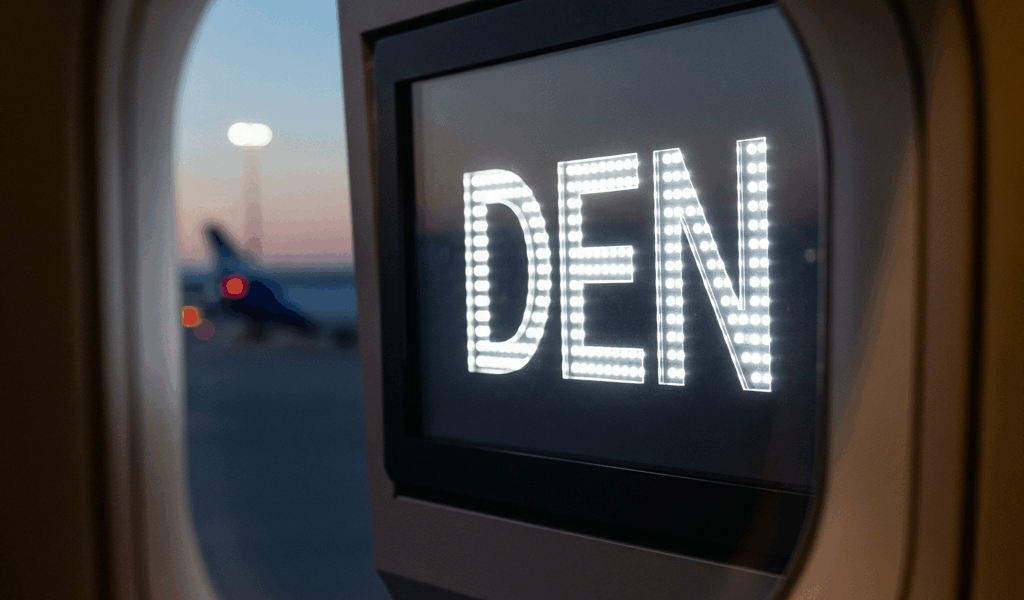
Everyone Calls It DIA But Your Ticket Says DEN
Denver airport codes have become harder to navigate with all the confusion flying around. The airport is called Denver International Airport. Highway signs say DIA. Locals say DIA. Every news anchor in the city says DIA. Then you open Expedia or pull up your boarding pass and there it is — DEN. Three letters that don’t match the name at all. I flew out of Denver for the first time in 2019 and stood at the United counter genuinely convinced I’d booked the wrong airport. The agent stared at me like I’d asked her to explain gravity. Turns out the answer is actually fascinating once you know where to look.
Today, I will share it all with you. So, without further ado, let’s dive in.
How IATA Codes Actually Get Assigned
The International Air Transport Association — IATA — manages the three-letter codes used to identify every airport in the global aviation system. Every airline runs on them. Every booking platform is built around them behind the scenes.
But what is an IATA code, really? In essence, it’s a standardized identifier assigned to airports for routing, ticketing, and logistics. But it’s much more than that. Most people assume the codes are just initials pulled from the airport’s name. They’re not. Codes get assigned based on historical city identifiers that predate modern airport names, whatever was already sitting in the registry when an airport joined the system, and plain old availability. There’s no committee making sure ORD lines up with “O’Hare” or that MIA spells out “Miami International Airport.” Once a code gets baked into airline reservation systems worldwide, changing it becomes an operational nightmare — so they almost never do.
Why DEN and Not DIA
Frustrated by this exact mystery on a random Tuesday night, I ended up buried in aviation history far longer than any reasonable person should be. Here’s what I found.
DEN wasn’t created for Denver International Airport. It already belonged to Stapleton International Airport, which served Denver for decades before DIA ever broke ground. When airlines built out their reservation systems — when travel agents started booking tickets on those chunky early terminals, when the global aviation infrastructure started standardizing around three-letter identifiers — Denver was DEN. That was 1944. That was settled.
Denver International Airport opened in February 1995 and replaced Stapleton entirely. But the new airport didn’t get a fresh code. It inherited DEN. Every airline, every computer reservation system, every booking database on earth already recognized DEN as Denver. Creating a new code — call it DIA, say — would have required every single one of those systems to update at once. Airlines would have rerouted connections, reissued tickets, and reprogrammed gate systems across hundreds of airports. Enormous cost. Zero operational benefit.
So DEN stayed. It just moved 25 miles northeast to a different building.
DIA, on the other hand, is a nickname — the shorthand locals and news stations landed on for Denver International Airport. It makes intuitive sense as an abbreviation. But it doesn’t exist anywhere in the IATA registry. You will never check a bag to DIA. It simply isn’t a code.
The piece that matters most here — because once you know DEN belonged to Stapleton first, the whole thing clicks into place immediately. Steer clear of where I went wrong and spend twenty minutes second-guessing your booking confirmation at the ticket counter.
What Happened to Stapleton Airport
Stapleton International Airport closed on February 28, 1995 — the same day Denver International opened its doors about 25 miles to the northeast. It had served Denver since 1929 and was moving tens of millions of passengers annually by the end of its run. That was one of the largest airport transitions in American aviation history.
The closure wasn’t tidy. Airlines moved operations overnight — literally overnight. Ground crews, equipment, gate assignments, fuel infrastructure, baggage systems. All of it shifted to the new facility in a coordinated handoff that took months of planning and was still chaotic on day one. I’m apparently fascinated by the logistics of that transition, and reading first-hand accounts from airline workers who lived through it never gets old.
The old Stapleton site sat largely dormant for years afterward. Eventually it got redeveloped into a residential and commercial neighborhood called Stapleton — now rebranded as Central Park. What Stapleton left behind, besides the neighborhood name, was DEN. That three-letter code outlived the airport that carried it and quietly attached itself to the new one. No ceremony. No announcement. Just continuity.
Other Airports Where the Code and Name Don’t Match
Denver is far from alone here. A few examples that follow the exact same pattern:
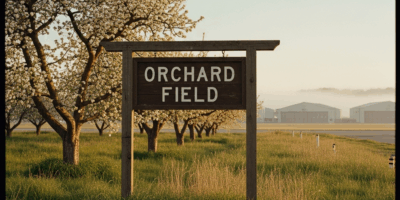
- ORD — O’Hare International Airport, Chicago: ORD comes from Orchard Field, the site’s name during World War II. The airport was renamed to honor Navy pilot Edward “Butch” O’Hare in 1949 — the code never followed. That’s what makes aviation history endearing to us frequent flyers.
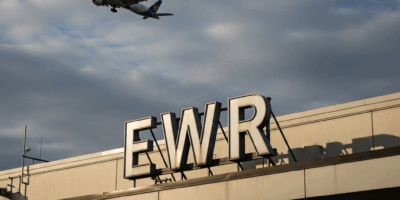
- EWR — Newark Liberty International Airport: EWR at least abbreviates Newark directly, but travelers booking New York flights and landing on a ticket stamped EWR have been confused since the jet age began. Still happens constantly.
- LHR — London Heathrow Airport: Probably the cleanest example — LHR abbreviates “London Heathrow” rather than pulling initials — but it still catches first-time international travelers off guard every single day.
In every case, the code reflects where the airport came from, not what it’s called today. DEN is the same story — a relic of Stapleton’s identity that now belongs to one of the busiest airports in the United States. The airport became DIA in conversation and DEN in every system that actually moves planes. Both names are real. Only one of them gets you on a flight.

Stay in the loop
Get the latest airport pin updates delivered to your inbox.