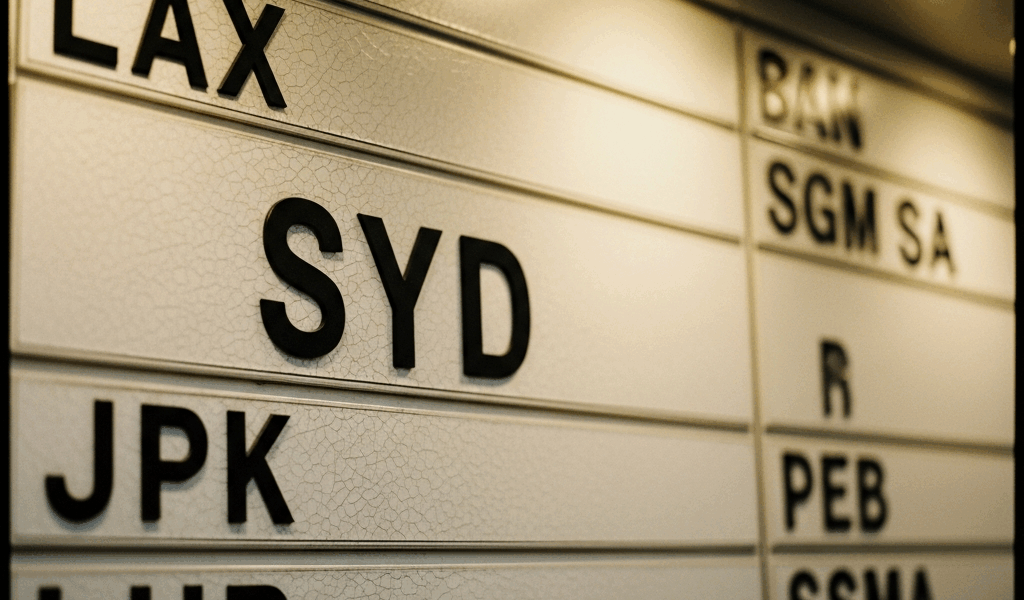
The Short Answer Behind SYD
Airport codes have evolved with all the misinformation flying around — people overthinking three-letter strings that were never meant to be puzzles in the first place. So if you’ve typed why does Sydney Airport use SYD not SYA into a search bar lately, here’s the answer: SYD comes straight from the first three letters of Sydney. That’s genuinely it. IATA grabs the most recognizable cluster from a city’s name, and SYD nails that on the first try. SYA doesn’t. It reads like a typo for something else entirely. There was never real competition here.
IATA directories and aviation records show that many airport codes derive from the destination city rather than the airport’s branded name. Sydney’s code is one of the cleaner examples in the entire global network — and understanding it unlocks how the whole system actually operates.
How IATA Assigns Airport Codes
But what is IATA, exactly? In essence, it’s the International Air Transport Association — the body that manages three-letter location identifiers used by airlines, booking platforms, and travel agencies worldwide. But it’s much more than that. Every commercial airport on Earth gets one code. The system standardized formally in the 1940s, though informal regional codes existed well before that, with many early identifiers simply inherited from whatever local convention was already operating on the ground.
The assignment logic follows a rough priority: reflect the city or airport name, keep it memorable, and confirm it’s actually available. Phonetic clarity matters too — a code that sounds vaguely like its place is easier for gate agents, baggage handlers, and half-asleep passengers to work with at 5:45 a.m. on a Tuesday morning. Don’t underestimate that last part.
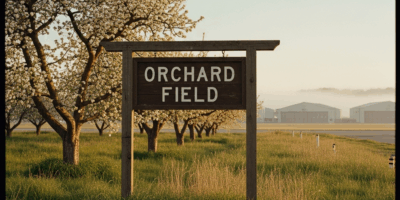
Availability is where things get messy. Popular city-name abbreviations disappear fast. That’s why Chicago O’Hare runs as ORD — pulled from Orchard Field, its original name before a 1949 rename — and Newark operates as EWR. Legacy quirks, baked in before modern standardization caught up. Sydney dodged all of that. SYD was sitting there, unclaimed, obvious. Done.
Why SYA Was Never Going to Happen
Quick note before the rest of this. SYA is actually assigned — it belongs to Shemya Air Force Base, a remote U.S. military airfield sitting in Alaska’s Aleutian Islands. So even in some alternate universe where IATA decided the “D” in Sydney was expendable, SYA was already gone. But that’s almost beside the point.
The real problem is that SYA just doesn’t work as an abbreviation. Look at the word “Sydney” — the letters S, Y, and D carry the full phonetic weight of the name. Drop the D, swap in an A, and you’ve gutted the part that makes it recognizable. SYA could stand for Syria, Soya, Sanya, or frankly a dozen other things depending on who’s squinting at the baggage tag. SYD points directly and unambiguously to one city. Once you see the Alaska connection, the whole question resolves itself in about ten seconds.
Sydney Airport’s Full Code History
The airport’s official name is Sydney Kingsford Smith Airport — named after Charles Kingsford Smith, the pioneering Australian aviator who completed the first transpacific flight in 1928, covering roughly 11,800 kilometres across open ocean. Kingsford Smith is a genuine legend in Australian aviation. His name is on the terminal signage, the departure boards, the official documentation. His name is not in the code.
That’s completely normal, and that pattern reflects the city-centered logic used for many airport codes. Airport codes almost universally reflect city identity rather than airport branding. City-derived codes are particularly common among major international hubs. LHR reflects Heathrow, sure, but Heathrow functions as a city-level identifier at this point. ATL spells out Atlanta without hesitation. SYD does the same for Sydney.
Kingsford Smith Airport opened at Mascot in 1920 — making it one of the oldest continuously operating commercial airports anywhere on Earth. By the time three-letter codes were formally standardized internationally, the airport had been running under various names for decades. Its connection to Sydney was always the primary identifier, though. The code followed that logic exactly, no deviation.
Other Airport Codes That Follow the Same Pattern
Sydney isn’t a special case. The city-abbreviation pattern shows up constantly across the global network, and a few examples from this series make the point cleanly. So, without further ado, let’s dive in.
- DXB — Dubai International Airport. Dubai, DXB. The X fills a structural gap because DUB was already claimed by Dublin — another availability collision, same solution. The city name still anchors everything.
- MEL — Melbourne Airport. Three letters, first three of the city name, zero drama. Same logic as SYD, applied one flight across the Bass Strait.
- JNB — O.R. Tambo International Airport, Johannesburg. The airport’s formal name honours Oliver Tambo. The code comes from Johannesburg. City wins again — every time.
The underlying principle holds consistently: formal airport names change, get renamed for politicians and pioneers and national heroes — sometimes more than once in a generation — but the city name is permanent. IATA codes are built for operational stability, not for honouring whoever the airport is currently named after. That’s not cynical. It’s just practical. A baggage tag reading SYD will route a suitcase to Sydney regardless of what the terminal signs say this decade or the next.
I’m apparently wired to notice these patterns everywhere now, and honestly, the city-name logic works for me while invented alternatives never quite do. Skip past the mistake I made of second-guessing the obvious answer. Next time you’re squinting at a boarding pass trying to decode a three-letter string, the city is almost always hiding right there in the letters — first three, front of the word, exactly where you’d expect it.

Stay in the loop
Get the latest airport pin updates delivered to your inbox.