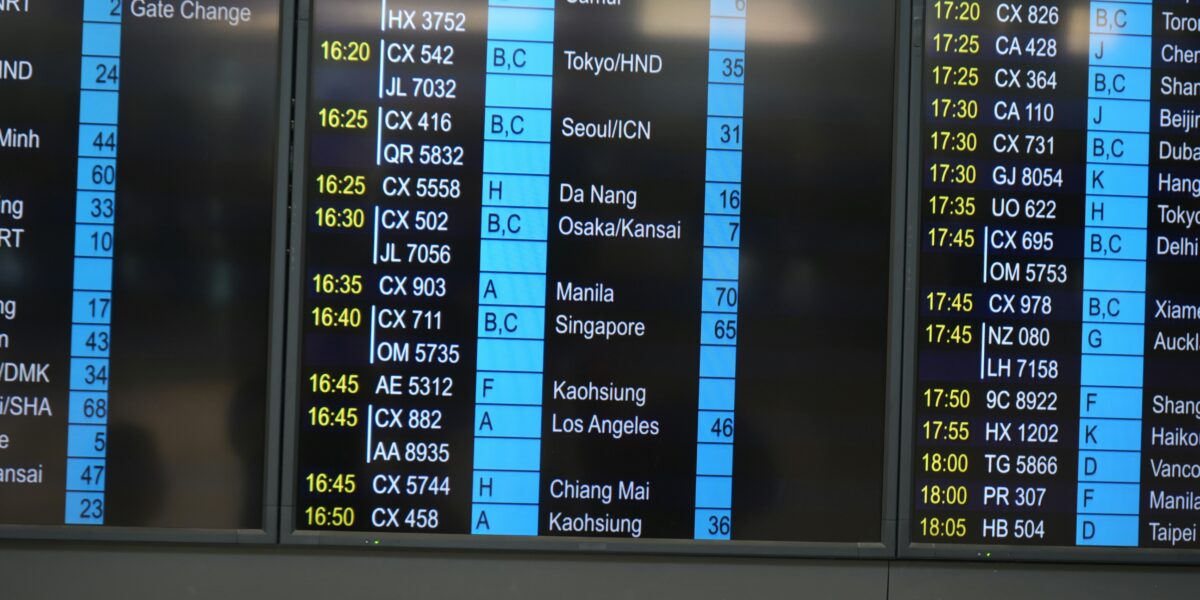
Knowing airport codes speeds travel planning, eases connections, and marks you as someone who actually travels rather than vacations occasionally. These 50 codes represent the world’s busiest hubs—places where flights connect, itineraries intersect, and everyone eventually passes through.

United States Mega Hubs
That’s what makes American aviation notable to us frequent flyers—the sheer scale of domestic hub operations. American carriers dominate global aviation, and their fortress hubs handle staggering volumes.
ATL – Hartsfield-Jackson Atlanta: The world’s busiest airport by passenger traffic for most of the past two decades. Delta’s primary hub handles over 90 million passengers annually. Every domestic connection seems to route through ATL.
DFW – Dallas/Fort Worth: American Airlines’ largest hub sprawls across 17,000 acres. The airport’s location—central to the continental US—makes it a natural connection point. Second-busiest American airport.
DEN – Denver International: United’s hub with the distinctive white-tent roof. Controversies about construction delays and cost overruns are forgotten now—DEN is essential infrastructure for Rocky Mountain access.
ORD – O’Hare (Chicago): United and American share dominance at this legendary hub. The airport code comes from “Orchard Field”—its original name before being renamed for a World War II flying ace.
LAX – Los Angeles: Gateway to Asia and the Pacific. Nine terminals, six runways, constant construction. LAX’s complexity rewards familiarity; first-timers frequently miss connections.
JFK – John F. Kennedy (New York): America’s premier international gateway. Every major global carrier serves JFK. The airport’s six terminals each function almost as separate airports.
SFO – San Francisco: Tech industry hub and United Airlines focus city. Fog delays are legendary; experienced travelers pad connections accordingly.
SEA – Seattle-Tacoma: Alaska Airlines hub and growing international gateway. Boeing’s backyard sees constant aviation industry traffic.
PHX – Phoenix Sky Harbor: American hub with massive snowbird traffic. The airport’s convenient location near downtown and generally good weather make it one of the easier mega-hubs to navigate.
MIA – Miami: American Airlines’ Latin America and Caribbean hub. The gateway to South America handles passengers in Spanish as often as English.
European Mega Hubs
European hubs connect continents and serve as gateways between regions.
LHR – London Heathrow: Europe’s busiest airport and British Airways’ home. Five terminals, endless construction, and the most convenient central London access of London’s airports.
CDG – Paris Charles de Gaulle: Air France’s hub with distinctive circular terminal design. Connections require knowing which terminal you need—they’re far apart.
AMS – Amsterdam Schiphol: KLM’s hub and one of Europe’s best-connected airports. Single-terminal design makes connections straightforward. Below sea level—the only major airport built on reclaimed land.
FRA – Frankfurt: Lufthansa’s primary hub and Germany’s busiest airport. The airport’s efficiency is legendary; Germans engineered the connection process thoroughly.
MAD – Madrid Barajas: Iberia’s hub and Spain’s gateway. Terminal 4, designed by Richard Rogers, is architecturally stunning and surprisingly efficient.
IST – Istanbul: Turkish Airlines’ hub opened in 2019 as one of the world’s largest airports. Turkey’s geographic position makes IST a natural Europe-Asia connection point.
FCO – Rome Fiumicino: Italy’s largest airport, named after Leonardo da Vinci. Alitalia’s former hub, now serving Italian carriers and many European low-cost options.
MUC – Munich: Lufthansa’s second hub with award-winning passenger experience. The beer garden between terminals is exactly what you’d expect from Bavaria.
ZRH – Zurich: SWISS hub with Swiss precision in operations. Chocolate shops and watch stores line the concourses.
BCN – Barcelona: Spain’s second-largest airport serving Catalonia. Vueling’s hub and major European low-cost carrier destination.
Asian Mega Hubs
Asia’s hubs have grown explosively, now handling volumes that rival or exceed traditional Western leaders.
DXB – Dubai: Emirates’ home and the world’s busiest for international passengers. The hub connects essentially anywhere to anywhere through the Middle East.
SIN – Singapore Changi: Consistently rated the world’s best airport. Singapore Airlines’ hub with amenities including a butterfly garden, swimming pool, and free city tours during layovers.
HKG – Hong Kong: Cathay Pacific’s hub on a man-made island. Despite political challenges, HKG remains a critical Asia-Pacific gateway.
NRT – Tokyo Narita: Japan’s primary international airport, 60 kilometers from Tokyo. The distance to the city is significant—plan accordingly.
HND – Tokyo Haneda: Japan’s second international airport, much closer to downtown. Domestic hub that’s increasingly taking international traffic from Narita.
ICN – Seoul Incheon: Korean Air and Asiana’s hub. Consistently rated among the world’s best airports with exceptional facilities.
PEK – Beijing Capital: China’s traditional primary gateway, though traffic has shifted to the new Daxing airport.
PKX – Beijing Daxing: The world’s largest single-building terminal, opened in 2019. Starfish-shaped design by Zaha Hadid architects.
PVG – Shanghai Pudong: China Eastern’s hub serving international traffic to Shanghai.
BKK – Bangkok Suvarnabhumi: Thai Airways’ hub and Southeast Asia’s major connector. The name means “Golden Land” in Sanskrit.
Middle East Hubs
Gulf carriers built global networks through strategic hub development.
DOH – Doha Hamad: Qatar Airways’ home, one of the world’s newest major airports. Extravagant art installations throughout terminals.
AUH – Abu Dhabi: Etihad Airways’ hub with the distinctive curved terminal design.
Southern Hemisphere Hubs
SYD – Sydney Kingsford Smith: Australia’s busiest airport and Qantas’ home base. Gateway to Oceania for most Northern Hemisphere travelers.
MEL – Melbourne Tullamarine: Australia’s second-largest airport serving Victoria.
JNB – Johannesburg O.R. Tambo: South Africa’s primary gateway and Africa’s busiest airport. Ethiopian, Kenya Airways, and South African Airways connect the continent through JNB.
GRU – São Paulo Guarulhos: Brazil’s largest airport and LATAM’s hub. South America’s primary connection point.
EZE – Buenos Aires Ezeiza: Argentina’s international airport, 35 kilometers from the city center.
Canadian Hubs
YYZ – Toronto Pearson: Canada’s busiest airport and Air Canada’s primary hub. The “YY” prefix is common in Canadian codes.
YVR – Vancouver: Pacific gateway with excellent Asian connections and award-winning terminal design.
YUL – Montreal Trudeau: Quebec’s gateway serving French Canada.
Memorization Strategies
Pattern recognition: Many codes relate to city names (LAX, JFK, SFO). Others relate to older names (ORD from Orchard Field, YYZ from a radio navigation beacon).
Regional prefixes: Canadian airports use “Y” prefix. Australian airports often start with airport name letters (SYD, MEL, BNE).
Frequent exposure: Travel regularly and codes become automatic. Check departure boards, read itineraries, notice routing—the codes stick naturally.
Why it matters: Recognizing codes speeds airport navigation, eases booking, and signals travel competence. When your boarding pass says FRA-SIN-SYD, you know the routing instantly—Frankfurt to Singapore to Sydney. That knowledge saves questions and streamlines every journey.
For a documented example, see the meaning of Miami’s MIA airport code.




Stay in the loop
Get the latest airport pin updates delivered to your inbox.