Columbus Airport — What You Actually Need to Know
Columbus airport guides have gotten complicated with all the noise flying around. Generic terminal maps. Airline rosters nobody asked for. A parking price table stripped of any useful context. As someone who flies out of CMH regularly, I learned everything there is to know about this airport the hard way. Today, I will share it all with you — including the stuff most guides bury three paragraphs from the bottom or skip entirely.
Why CMH Is Easier Than People Expect
The single biggest mistake people make before flying through John Glenn Columbus International Airport is over-preparing for complexity that isn’t there. I’ve personally watched people show up two and a half hours early for a domestic flight, stress-walking the terminal like they’re defusing something. They’re not.
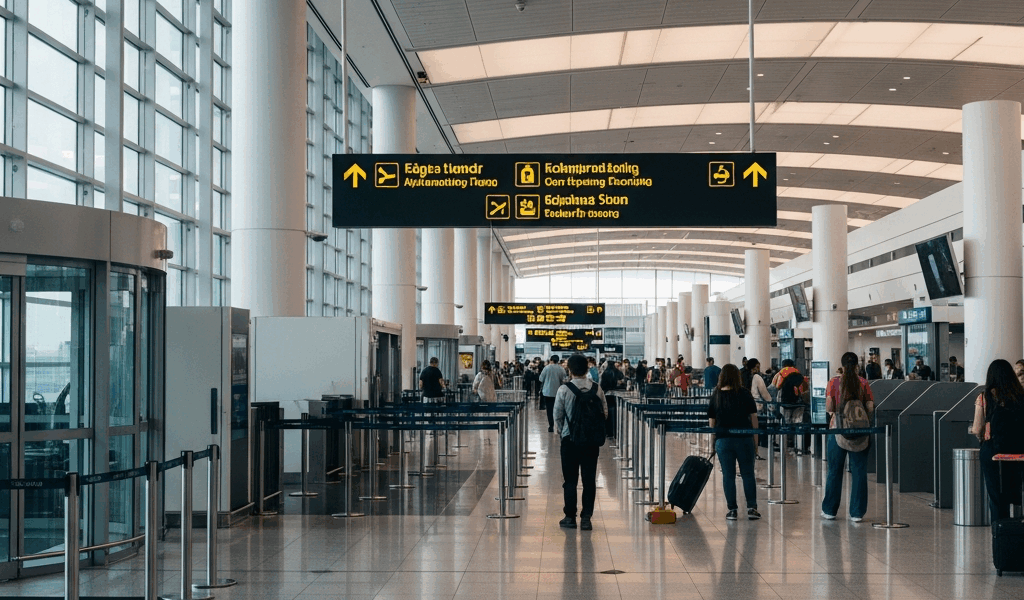
CMH is a single-terminal airport with two concourses — B and C. That’s it. No inter-terminal trains. No tram to a satellite building. No shuttle bus between checkpoints. You park, walk in, check in, clear security once, and you’re airside. The layout is compact. The signage actually works. First-timers rarely get turned around.
But what is CMH, really? In essence, it’s a mid-size regional airport handling roughly 8 million passengers a year. But it’s much more than that. That passenger volume puts it in a genuinely useful middle zone — large enough to have real infrastructure like TSA PreCheck, CLEAR, and multiple food operators, but small enough that the whole operation stays human-scaled. You won’t feel like a number being processed. Compare that experience to Chicago O’Hare on any given Tuesday and you’ll immediately understand why Columbus regulars actually like flying out of here. That’s what makes CMH endearing to us frequent fliers.
The one genuine constraint is a single security checkpoint for all departing passengers. One. That’s both the gift and the problem — and the problem only shows up during a specific window every weekday morning. So, without further ado, let’s dive in.
Security — The One Thing Worth Timing Right
Here’s a position I’ll defend: TSA PreCheck is worth having at CMH more than at airports twice its size. That sounds counterintuitive. Bigger airports, more chaos, PreCheck matters more — that’s the conventional logic. It’s wrong here.
At larger hubs, PreCheck lanes are often crowded themselves because the eligible traveler pool is enormous. At CMH, the PreCheck lane actually moves. When the standard lane backs up during the 5–8am departure window on weekdays — and it does back up, sometimes snaking well past the ticketing counters — the PreCheck lane stays functional. Don’t make my mistake. I found this out on an early Monday flight to LaGuardia. Standard lane. Forty-five minutes. Boarded with about six minutes to spare and zero dignity intact.
CLEAR is also available at CMH. I’m apparently a twice-a-week traveler and the CLEAR plus PreCheck combo works for me, while the standard lane never quite does on Monday mornings. But for occasional travelers, that combination is honestly overkill. For a weekly business flier, it’s a different math problem entirely.
Practical arrival guidance: outside peak morning hours, 75 minutes before a domestic departure is genuinely sufficient. Not cutting it close — actually fine. But for early Monday or Friday flights inside that 5–8am window, give yourself 90 minutes. The checkpoint is centrally located after the ticketing area. No hidden secondary checkpoints exist. Once you’re through, you’re through. The anxiety most people carry into CMH is borrowed from busier airports. Leave it at home.
Food and Coffee Worth Eating Past Security
Probably should have opened with this section, honestly. Nothing generates more post-flight regret than standing at a gate holding a $14 airport sandwich you absolutely didn’t need to settle for.
Concourse B is the stronger option for food. More vendors, better throughput on busy mornings — if you want anything resembling a real meal or a coffee that isn’t a fallback decision, B is where you want to be. Concourse C is where the options thin out considerably. This isn’t a knock on the airport. It’s just geometry and square footage. The practical move if you’ve got a C gate: eat or grab coffee before clearing into that concourse. Walk back toward the checkpoint area where the selection is better, then head to your gate.
Roosters — the local Ohio chain — is worth knowing about. It shows up airside at CMH and it’s a legitimate option if you want something that tastes like a human being made it. Starbucks is present, as it is in every airport in North America, functioning exactly as you’d expect. Lines move, drinks are consistent, nobody’s pretending it’s special.
One thing most guides completely miss: food options near baggage claim on the arrivals level. If you’ve just landed, you’re hungry, and you’re waiting on checked bags, there are options in that pre-security zone that most travelers walk straight past without registering. Not destination dining — but better than standing at the carousel running on fumes.
The honest bottom line on CMH food: it’s not an airport you’d build a layover around for the culinary experience. But it’s not a wasteland either. Go to Concourse B with purpose, grab what you actually want, and don’t let yourself end up with a $4 vending machine bag of pretzels because you assumed there was nothing good.
Parking — Which Lot Is Actually Worth It
The economy lot at CMH is genuinely underrated. I say that as someone who spent a full year defaulting to the garage out of pure habit before actually doing the math. Don’t make my mistake.
Current pricing runs roughly $10–$11 per day for economy, compared to $17–$18 per day for the garage. Valet sits around $30 per day — fine, different product, not the point here. On a four-day trip: economy lands around $44, the garage comes in around $70. That’s a real $26 difference. The shuttle from the economy lot runs frequently enough that the wait rarely exceeds five to eight minutes, and the total time difference between economy and garage across a four-day trip is probably twenty minutes combined. You’re essentially paying $26 extra to save twenty minutes. Most people I’ve talked to who actually ran those numbers switched to economy and never looked back.
For trips under three days, Uber and Lyft frequently win the math entirely. The rideshare pickup area at CMH sits on the ground level — and this matters — it’s one of the smoother pickup experiences I’ve encountered at any mid-size airport. Signage is clear. Drivers find it without circling. Wait times stay short outside major holiday periods.
My general rule: anything under three days, rideshare. Three days or more, economy lot. First, you should map out your trip length — at least if you want to avoid overpaying for parking you don’t need. The garage might be the best option for people who genuinely prioritize walking distance over money. That is because the time savings are real — just be honest with yourself about what you’re actually buying.
Connections and Layovers at CMH — What the Layout Means
CMH is not a hub airport. Delta, American, United — none of them route through Columbus the way they route through Atlanta or Dallas. Intentional connections booked through CMH are uncommon. Most layover situations here result from irregular operations — weather rerouting, missed connections elsewhere that put passengers on whatever available flight gets them moving again.
Frustrated by a brutally optimistic 40-minute connection window on a rebooked itinerary once, I developed an actual opinion about minimum connection time here using nothing but personal suffering and a gate map. The concourses connect airside — domestic-to-domestic connections don’t require re-clearing security, which is a genuine advantage. But the walk between the far end of Concourse B and the far end of Concourse C is longer than the compact terminal impression suggests. At a normal walking pace, you’re looking at roughly ten minutes gate to gate at the extremes. Factor in deplaning time and the fact that your inbound gate is never the convenient one, and 45 minutes is technically doable — but the kind of doable that leaves you sweating and annoyed. Sixty minutes is the real comfort floor at CMH.
For long layovers, set realistic expectations about airside lounge access. No major airline club presence exists in the traditional sense. Priority Pass has some representation, but CMH is not an airport where you’ll sink into a Centurion Lounge and eat your way through a three-hour delay. The terminal is pleasant. Seating is adequate. The food options already covered above will carry you. It’s just not a lounge airport — know that going in and you won’t be disappointed.
What CMH is, at the end of it, is an airport that rewards low expectations and punishes the kind of overthinking people import from genuinely complicated airports. Get there at the right time, pick the economy lot, eat in Concourse B, and let the rest of it be easy. It usually is.


Stay in the loop
Get the latest airport pin updates delivered to your inbox.