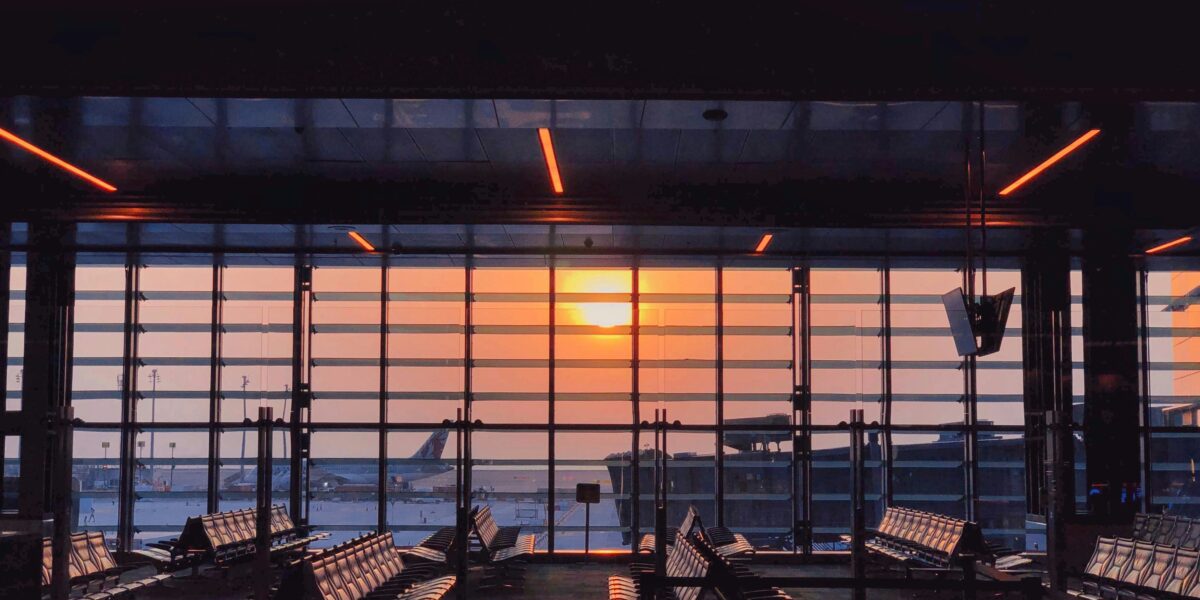
I ended up at McAllen International Airport almost by accident. I was originally supposed to fly into San Antonio for a work trip along the Texas-Mexico border, but a last-minute fare change had me rerouting through MFE instead. Honestly? Best travel accident I’ve had in years. The airport is small, efficient, and sits right where you need it if you’re doing anything in the Rio Grande Valley.
Where It Is and How to Get There
MFE is about two miles south of downtown McAllen, which means you can land and be sitting in a restaurant on Main Street in fifteen minutes. That kind of proximity is rare for an airport, even a regional one. You reach it via US Highway 83 or US Highway 281, both of which are major arteries through the Valley.
Local buses run between downtown and the airport, though I’ll be honest — the schedule wasn’t frequent enough for me to rely on it. I grabbed a ride-share and it cost maybe seven dollars. Taxis are also lined up outside the terminal. Rental car agencies are inside the airport building, and I’d recommend booking in advance because inventory at smaller airports can be thin, especially during winter when the snowbirds descend on South Texas. Probably should have led with this — McAllen gets surprisingly busy from November through March because people from the northern states flock down for the warm weather.
Inside the Terminal
The terminal is small enough that you can see from one end to the other. That sounds like a criticism but it’s genuinely not. Free Wi-Fi works fine, charging stations are placed sensibly near the gate areas, and there are enough seats that I’ve never had to stand or sit on the floor. That alone puts it ahead of certain terminals at DFW, if we’re being honest.
Food options include a food court with local and standard fare. I had a breakfast taco from one of the vendors that was, no exaggeration, better than anything I’ve gotten at a major airport. South Texas knows its way around a tortilla, and apparently that extends to airport concessions. There are a few shops for travel items and local souvenirs — nothing extravagant, but you can grab what you need.
Accessibility is well handled. Elevators, wheelchair assistance, and clearly marked signage are all there. The staff seemed particularly attentive when I was there. I watched an older couple get walked to their gate by an employee who carried their bags and chatted with them the whole way. That’s what makes McAllen International endearing. You don’t see that at the big airports.
Airlines and Where You Can Go
American Airlines and United Airlines are the main carriers out of MFE. American runs flights to Dallas-Fort Worth, and United connects to Houston’s George Bush Intercontinental. From either of those hubs, you can get basically anywhere. Allegiant Air also pops up with seasonal routes to popular vacation destinations — Las Vegas and a few others, depending on the time of year.
The flight to DFW is about an hour and a half, and the Houston route is even shorter. I’ve used MFE as a connection point several times now, and the timing works out well if you plan your layovers right. The one thing to watch is flight frequency. There aren’t departures every thirty minutes like you’d get at a big hub, so if you miss your flight or there’s a cancellation, your options get limited fast. Build in some cushion.
Customs and Border Operations
Being an international airport just miles from the Mexican border, MFE has Customs and Border Protection on site. Cross-border travel is a big part of the local economy, and the airport supports that with processing facilities for international arrivals. If you’re flying in from Mexico, you’ll clear customs here.
Make sure your documentation is in order — passport, any required visas, customs declaration forms. The CBP officers I interacted with were professional and efficient. No complaints. The whole process took maybe twenty minutes, which is quick by any standard.
Security Screening
Standard TSA procedures apply. Because passenger volume is lower than major airports, security lines move fast. I’ve been through in under ten minutes every time. The TSA agents were thorough but not unpleasant about it, which isn’t always the case elsewhere. I’d still recommend arriving at least 90 minutes before your flight, though. If something goes sideways with your boarding pass or there’s a random delay, you want that buffer.
The Airport’s Environmental Push
MFE has been working on green initiatives, which I didn’t expect from a smaller regional airport. Energy-efficient lighting throughout the terminal, waste reduction programs, and an emphasis on sustainable materials in recent renovation work. I noticed recycling bins everywhere, which sounds basic but isn’t universal at airports. Whether this factors into your travel decisions is personal, but I appreciate when an airport thinks beyond just moving passengers through.
What’s Being Built and Planned
The airport has growth plans. Expansion projects include facility upgrades and potentially new terminal space to handle increasing passenger traffic. There’s talk of automated check-in kiosks and improved baggage handling systems. The Rio Grande Valley is growing, and MFE is trying to keep pace. I’ll be curious to see how it evolves over the next few years — hopefully they keep the small-airport efficiency while adding capacity.
What MFE Means for the Valley
This airport punches above its weight economically. It supports tourism, business travel, and trade across the border. Local businesses depend on the connectivity it provides, and it’s a significant employer in the area. I talked to a shop owner in downtown McAllen who said her business gets a noticeable bump during peak travel months because of visitors flying into MFE. The airport also participates in community events and local initiatives, which helps maintain a good relationship with the surrounding area.
A Bit of History
MFE has been around since the late 1920s, starting as a basic landing strip. It’s been through multiple transformations since then — federal investments, runway expansions, terminal builds and rebuilds. The current facility bears almost no resemblance to what was originally there, but there’s something cool about an airport with nearly a century of history. A few old photos in the terminal show what the field looked like in the 1940s, and the contrast is wild. From a dirt strip with a wind sock to a fully equipped international airport. Not a bad run.
Practical Tips
If you’re flying into MFE for the first time, here’s what I’d tell a friend. Book your rental car early, especially during winter months. Download the airlines’ apps for real-time gate and delay information — the airport isn’t always fast about updating the departure boards. Bring cash for the breakfast tacos. And if you have time before or after your flight, drive the short distance to the border area in Reynosa for some of the best street food you’ll find anywhere. Just make sure your passport is handy for the return crossing.
McAllen International Airport isn’t going to make any “world’s best airports” lists, and it doesn’t need to. It does its job well, the staff is friendly, and it connects a growing region to the rest of the country without the headaches you’d get at larger airports. For the Rio Grande Valley, that’s exactly what’s needed.
Recommended Aviation Gear
David Clark H10-13.4 Aviation Headset – $376.95
The industry standard for aviation headsets.
Pilots Handbook of Aeronautical Knowledge – $25.42
Essential FAA handbook for every pilot.
As an Amazon Associate, we earn from qualifying purchases.