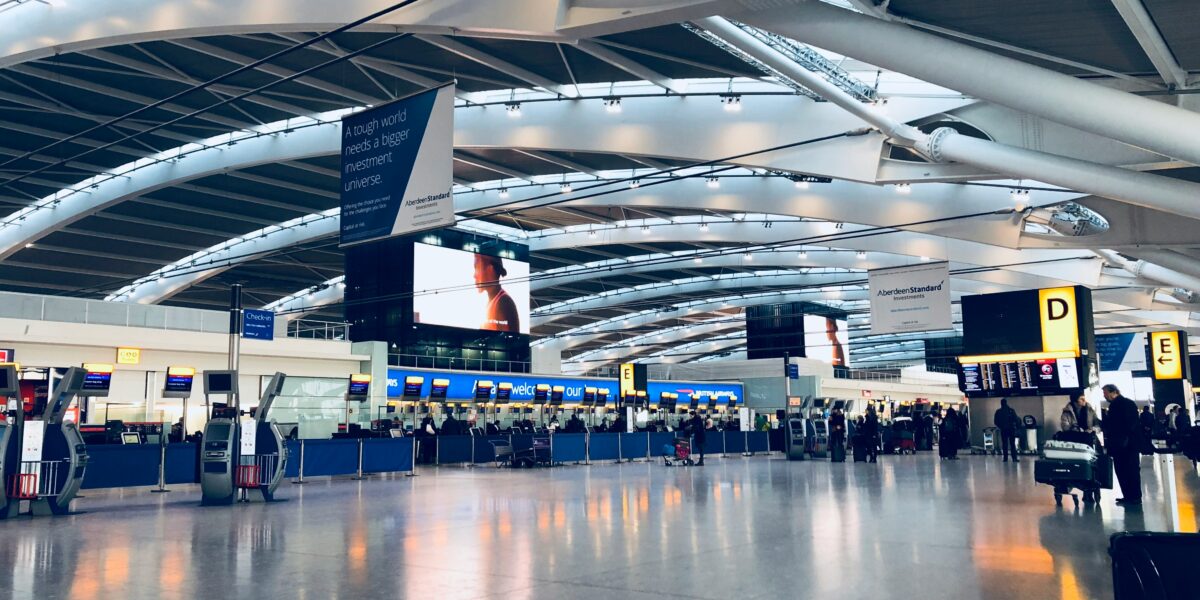
St. Louis Lambert International Airport (STL) has two separate passenger terminals. Terminal 1 serves the A and C gate areas and most airlines other than Southwest. Terminal 2 serves Southwest at the E gates and handles international arrivals at E29. The terminals are not connected by a public walking route; changing terminals requires the free landside shuttle and another trip through security.
Airline assignments, checkpoint hours, restaurants, parking rules, and construction conditions can change. Check your airline’s app and the official STL website on the travel day rather than relying solely on an older airport guide.
STL airport guide at a glance
| Airport code | STL |
|---|---|
| Official name | St. Louis Lambert International Airport |
| Passenger terminals | Terminal 1 and Terminal 2 |
| Southwest terminal | Terminal 2, E gates |
| Terminal 1 airlines | A and C gates; check the current official airline directory |
| Between terminals | Free landside shuttle; no public walking route |
| Rail | MetroLink stations serve both terminals |
| Security | Separate checkpoints for T1 A, T1 C, and T2 E/F; hours vary |
| Official maps | flystl.com terminal maps |
Which STL terminal does your airline use?
Terminal 1: A and C gates
Terminal 1 contains two active passenger checkpoint areas:
- A gates: the airport currently lists Air Canada, Delta, United, and some charter operations in this area.
- C gates: the airport currently lists Alaska, American, Frontier, and Southern Airways Express in this area.
Older guides that describe B as an ordinary active passenger concourse or place Southwest in C are misleading for current travelers. Use the airline and gate shown on the boarding pass. The official STL airline directory lists current gates and ticket-counter locations.
Terminal 2: E gates
Southwest operates from Terminal 2’s E gates. Terminal 2 also contains the international-arrivals facility at E29, used by listed international and charter service. A traveler flying Southwest should go to Terminal 2 unless the airline communicates a specific exception.
Do not choose a terminal from the destination alone. The operating airline determines where you check in, clear security, and retrieve bags.
How to travel between Terminal 1 and Terminal 2
STL says there is currently no public route to walk between the terminals. The airport provides a free terminal shuttle 24 hours a day between Terminal 1 Exit 12 and Terminal 2 Door 10. The published ride time is about 10 minutes, and scheduled pickup intervals are approximately 8–15 minutes.
The terminal shuttle is landside. Passengers making an ordinary connection between terminals must leave the secure area and clear TSA screening again at the destination terminal. Build in time for walking, waiting for the shuttle, the ride, and a second checkpoint. Checked baggage arrangements depend on the itinerary and airlines; confirm them with the carrier.
Southern Airways Express may offer limited post-security transport for its connecting passengers, but that is not a general passenger connection. The official STL FAQ has current shuttle details.
TSA checkpoints and opening times
STL publishes three main checkpoints:
- Terminal 1, A gates: currently listed as 3:30 a.m.–7:00 p.m.
- Terminal 1, C gates: currently listed as 3:30 a.m.–10:00 p.m.
- Terminal 2, E/F gates: currently listed as 3:30 a.m.–10:00 p.m.
Those hours are set by TSA and are explicitly subject to change. A terminal building being accessible does not mean its checkpoint or restaurants are open all night. Check the airport’s live TSA security page before an early or late flight.
How early to arrive depends on the airline, destination, baggage, parking plan, traveler needs, and current security conditions. Follow the airline’s recommendation. Add extra time if returning a rental car, checking bags, traveling internationally, needing accessibility assistance, or starting at the wrong terminal would be difficult to correct.
Parking and passenger pickup
Both terminals have attached garages, and STL operates additional Super Park facilities with shuttle service. Parking availability, reservation rules, and rates change, so compare the live options rather than relying on a fixed price in an article. The airport says its parking facilities operate 24 hours a day, every day.
STL provides a separate free cell-phone waiting lot for each terminal. Drivers may wait there until the arriving passenger has collected baggage and is ready at the curb. Vehicles may not remain stopped in the terminal arrivals areas while waiting.
Review current availability, lot maps, shuttle tracking, and any reservation requirement on the official parking and transportation page.
MetroLink, rideshare, taxis, and rental cars
MetroLink
MetroLink rail stations serve both terminals. The Terminal 1 station is near Door 1 on the ticketing level. The Terminal 2 station is reached near Door 12 through the parking garage. Check Metro Transit’s live schedule, service alerts, fare, and destination routing before relying on a particular travel time.
Uber and Lyft
The airport currently identifies the Terminal 1 rideshare zone at Door 6 on the departure level and the Terminal 2 zone at Door 12 on the arrivals level. Confirm the pickup pin and terminal in the app because construction can temporarily change curb operations.
Taxis
Terminal 1’s taxi zone is accessed near Door 14 toward the garage’s yellow level. Terminal 2 taxis use the garage area across from Door 12. Ask for an estimated fare and verify any airport pickup fee before leaving.
Rental cars
Rental-car facilities are off airport, and companies provide shuttles. Pickup doors vary by company and terminal. Use the reservation provider’s instructions and STL’s current transportation directory rather than walking to an assumed consolidated facility.
Food, shops, lounges, and services
Dining and retail are distributed among the A, C, and E gate areas; they are not all reachable after security from every checkpoint. Current local and national options include coffee, sit-down meals, quick service, convenience retail, and St. Louis-themed offerings. Hours often track flight activity and can differ by day.
The airport’s searchable shop, dine, and services directory lets travelers filter by location and see current status. Check the gate area before choosing a restaurant. Leaving a secure concourse for another terminal or checkpoint may require screening again.
Current airport-listed lounges include the American Airlines Admirals Club in the C gates and Wingtips St. Louis near E31. Access rules, hours, and guest policies belong to the lounge operators and may change.
Families, accessibility, pets, and military travelers
- Service-animal relief: the airport lists relief areas in the A, C, and E gate areas plus exterior locations at both terminals.
- Children: a Children’s Play Port is listed in Terminal 1 near C3.
- Wheelchairs and airline assistance: arrange service through the airline before travel and confirm the meeting location.
- Terminal and parking shuttles: STL states that its shuttle buses have wheelchair lifts.
- USO: the airport lists a USO in Terminal 1 baggage claim near Carousel 6; verify hours and eligibility.
Lost and found
The correct contact depends on where an item was lost. For an item left on an aircraft or in an airline-controlled area, contact the airline. The airport lists its Lost and Found at the Terminal 1 Airport Police Department near Door 18. TSA has a separate process for property left at screening. Record the date, terminal, flight, gate, item description, and identifying details before submitting a report.
Connecting at STL
A same-terminal connection is generally simpler, but gate assignments can change. Check the next boarding pass after landing. If the itinerary requires changing terminals, the lack of a public airside walkway is the important constraint: take the landside shuttle and expect to re-clear security.
Do not leave the secure area for food in another terminal unless there is ample time. Airlines control protected connections and rebooking obligations, especially on separate tickets, so ask the carrier before accepting a short connection that changes terminals.
What to do during a layover
For a short layover, stay in the assigned gate area and use the airport’s current dining map. For a longer layover, account for security and transit both ways before leaving. MetroLink provides access toward the city, but a published train time alone does not include waiting, walking, security, or the risk of service disruption.
St. Louis attractions such as the Gateway Arch and Forest Park are not “next to” the airport. Treat an off-airport visit as a separate trip with a conservative return buffer.
Frequently asked questions
What terminal is Southwest at STL?
Southwest operates from Terminal 2 at the E gates. Confirm the terminal and gate in the Southwest app or boarding pass on the travel day.
Can you walk from Terminal 1 to Terminal 2?
No public walking route is currently available. Take the free landside terminal shuttle between Terminal 1 Exit 12 and Terminal 2 Door 10.
Does changing terminals require security again?
For ordinary passengers, yes. The terminal shuttle operates landside, so changing terminals means leaving the secure area and clearing the destination checkpoint.
What time does STL airport open?
There is no single useful opening time for every service. Parking operates 24 hours, but TSA checkpoints and airline counters have defined hours that vary. Check the current checkpoint page and airline instructions for an early flight.
Does STL have trains to downtown?
MetroLink stations serve both terminals and connect into the regional transit network. Verify the current schedule, service alerts, fare, and destination route with Metro Transit.
How early should you arrive at STL?
Follow the airline’s guidance and add time for parking, shuttle travel, bag check, accessibility needs, and international processing. Live security conditions and checkpoint hours matter more than a universal promise.
Bottom line
The critical STL fact is the terminal split: most non-Southwest airlines use Terminal 1’s A or C gates, while Southwest uses Terminal 2’s E gates. There is no public walking route between terminals, and the free shuttle is landside. Check the boarding pass, official airline directory, checkpoint hours, parking availability, and terminal map shortly before departure.


Stay in the loop
Get the latest airport pin updates delivered to your inbox.