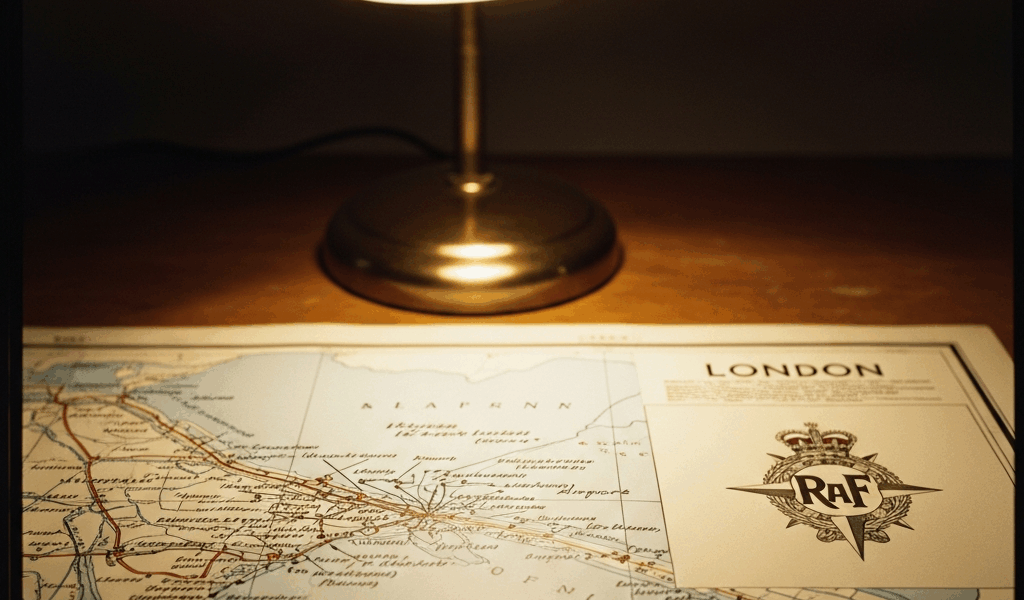
Airport codes have become harder to navigate with all the misinformation flying around. LHR gets thrown on roughly 80 million luggage tags every year, and almost nobody stops to ask what it actually means. I’ve stared at baggage carousels in a dozen countries, and that code shows up more than any other. So why LHR? Why not LHN, or LHE, or something else entirely? Most travel sites hand you a lazy one-liner and move on. The real answer involves a demolished English village, some early 1940s wartime decisions, and a naming convention that made obvious sense in 1946.
The Short Answer Most Sites Get Wrong
People assume airport codes just abbreviate the airport name. London Heathrow, so LHR. Clean, logical, done. Except that’s not really what happened.
The “H” in LHR doesn’t come from “Heathrow Airport” the way you’d think. It comes from the fact that Heathrow was already the name of an actual place — a hamlet, sitting on that land, long before anyone drew up runway plans. When site planners moved in during the 1940s, they didn’t brand the location. They just used the name that was already there.
Here’s what makes it genuinely strange: that hamlet got bulldozed. Homes demolished. Farms erased. Families relocated with wartime urgency and very little ceremony. The airport inherited the village’s name, and now that name appears on boarding passes from Auckland to Buenos Aires. The village is gone. The code lives on.
Where “Heathrow” Actually Came From
Worth mentioning before anything else. Understanding the place name makes everything else click.
Heathrow wasn’t always an airport — or even a notable dot on a map. It was a settlement in Middlesex, a working rural community that had existed for centuries before aviation changed anything. The name itself is straightforward Anglo-Saxon geography. “Heath” meant open land covered in heather and low scrub. “Row” was an old English term for a cluster of dwellings. Heathrow was, literally, the settlement on the heath. Exactly what it was. No mystery there.
During World War II, the British government needed airfield space fast. The Heathrow area checked the right boxes — far enough from central London to reduce bombing risk, close enough to be strategically useful, and open enough to commandeer quickly. The RAF moved in. By the time civilian aviation resumed in 1946, the location was already called Heathrow across government documents, air traffic logs, and early terminal paperwork. That was just the name of the place. Nobody chose it as a brand.
How IATA Built the Code
But what is an IATA code? In essence, it’s a three-letter identifier assigned to every commercial airport in the world. But it’s much more than that — it’s the backbone of every booking system, baggage scanner, and flight tracker on the planet. JFK. CDG. NRT. The whole system runs on these combinations.
For London specifically, a regional pattern emerged quickly. “L” designated the London area. Gatwick became LGW. Luton got LTN. Stansted ended up as STN. So when Heathrow needed a code, the formula was already established — L for London, then pull directly from the local place name.
Heathrow gave you H-E-A-T-H-R-O-W. The logical contraction was LHR. The H was the first significant consonant in the toponym, it didn’t conflict with codes already assigned to other London airports, and it held up cleanly in radio communication. “Lima Hotel Romeo.” That’s distinct. That’s unambiguous over static and noise at altitude.
So, without further ado, let’s settle the actual title question.
Why LHN Was Never Really in the Running
LHN would have required treating “Heathrow” as if it were two components — “Heath” plus some attached modifier. But Heathrow was a single toponym. One unified place name. You don’t split it and recombine it to manufacture a code.
IATA’s conventions in that era favored direct letter pulls from established geography. You worked with what was there. Taking L-H-R straight from “Heathrow” was the obvious move — cleaner than any alternative, consistent with the system already in use across London’s other airports. There was no meeting where someone proposed LHN and got outvoted. It simply wasn’t the natural derivation. The H was right there. It wasn’t already assigned. It made phonetic sense. Done.
The code may look arbitrary at first, but its relationship to London Heathrow becomes clearer when traced to the airport’s name.
What LHR Looks Like on Your Luggage Tag Today
Every time you fly through Heathrow, that code moves with you. Boarding pass. Bag tag. Flight tracker. Airline app. Three letters, everywhere.
I’m apparently someone who reads luggage tags the way other people read menus — obsessively, looking for patterns — and LHR works for me as a constant reminder that aviation history is hiding in plain sight. Most codes just blend into the background noise of travel. This one has a story worth knowing.
What most passengers don’t realize is that the code traces directly to a demolished English hamlet that hasn’t existed for nearly 80 years. It wasn’t generated by algorithm. No focus group signed off on it. It came from the name of a real place, inhabited by real people, who were displaced so a global transportation hub could be built on their land.
Side-step the error I made of spending years glancing at that code without thinking twice about it. The residents of Heathrow hamlet had no idea their village’s name would end up on baggage scanners from Singapore to São Paulo. But here it is — three letters, quietly carrying an entire erased community into every departure hall on earth.




Stay in the loop
Get the latest airport pin updates delivered to your inbox.