The Short Answer Most Sites Get Wrong
Airport codes have gotten complicated with all the misinformation flying around. Ask ten people why LAX is the code for Los Angeles and you’ll get ten confident, wrong answers. “It stands for Los Angeles International.” “The X means international.” Sure. Except none of that is how it actually happened.
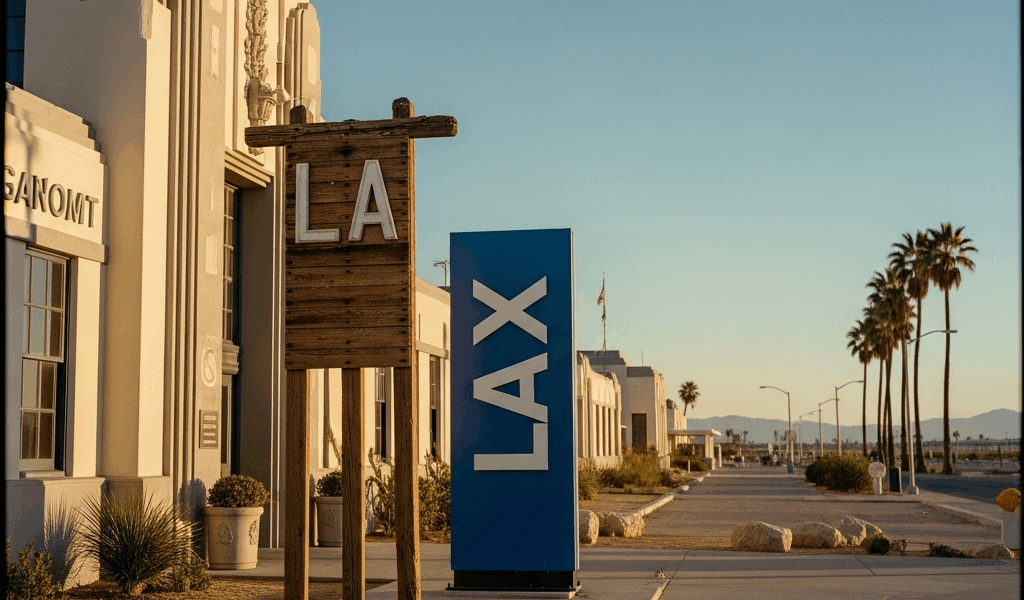
Los Angeles wasn’t always LAX. It was LA. Two letters, clean and simple. Then the aviation world grew up fast — faster than anyone anticipated — and the two-letter system collapsed under its own weight. What replaced it gave Los Angeles an X that nobody explicitly chose, nobody formally designed, and nobody has ever seriously tried to remove.
Most travel sites skip straight to “LAX means Los Angeles International Airport” and call it done. That’s backwards. The code didn’t come from the airport name. The airport name came from the code. Big difference.
Where Airport Codes Actually Come From
Before 1930, American airports ran on two-letter codes tied to city names. Los Angeles was LA. San Francisco was SF. Phoenix was PX. Clean system. Worked fine — until it didn’t.
Commercial aviation exploded through the late 1920s. Suddenly dozens of cities were demanding identifiers, and the two-letter combinations ran out fast. Too many collisions. Too many cities chasing the same initials. The U.S. Post Office, which managed airport designations at the time, made the call: three-letter codes, aligned with existing post office city abbreviations.
That’s where the X entered the picture.
Western airports were the problem. Many of them couldn’t form a clean, meaningful three-letter string from their city names. So administrators did what bureaucrats do when something doesn’t fit — they padded it. X became the placeholder letter. The “we needed a third character and this one was available” letter. Los Angeles Post Office carried the abbreviation LAX. Phoenix became PHX. And so it went across the western half of the country, leaving a trail of X’s on departure boards from California to New Mexico.
Some sources float a theory that the X came from “crossing out” invalid positions — marking placeholder slots. Honestly, that reads more like folklore than documented history. The administrative explanation is less romantic but more accurate: western cities needed a third letter, X was available, done.
Albuquerque became ABQ. Salt Lake City landed SLC. Smaller regional airports throughout the west collected X’s almost by default. It wasn’t a grand design. It was a filing solution.
How Los Angeles Ended Up With LAX Specifically
The airport that eventually became LAX opened in 1930 — a modest municipal airfield, nothing like the nine-terminal sprawl it is today. It was called “Los Angeles Airport.” When IATA standardized three-letter codes across the industry, the Post Office abbreviation LAX got assigned. The International Air Transport Association locked it in. That was that.
Probably should have opened with this section, honestly.
Here’s the part that surprises people: LAX could have changed. When the current terminal complex opened in 1961, Los Angeles had a genuine window to lobby for a new identifier. Airports do get re-designated — it happens. But by 1961, LAX was already printed on thousands of airline tickets. Luggage tags. Cargo manifests. Radio shorthand for pilots across the Pacific. The administrative cost of switching would have been enormous, and the cultural momentum behind those three letters was already building.
The 1960s and 1970s sealed it permanently. Commercial jet travel took off — literally — and LAX grew into one of the most important international hubs in the world. By the time anyone might have questioned the code, the code had become the airport’s identity. You don’t rebrand that. No airport handling 80 million passengers a year changes its identifier. The scale makes it untouchable.
Don’t make my mistake of assuming these codes were carefully designed. Most of them weren’t. LAX is three letters that fit a post office abbreviation at the right moment in history.
Why LAX Became Bigger Than Just a Code
Somewhere between 1975 and 1985, LAX stopped functioning as an aviation identifier and started functioning as a cultural shorthand. It’s in song lyrics — Ice Cube used it, various hip-hop artists made it geography. The Theme Building with its purple light fixtures became a visual anchor. Tom Bradley International Terminal became a pilgrimage point for travelers arriving from Asia and Europe for the first time.
That’s what makes LAX endearing to us as travelers. You’re not reciting an airport code when you say “I’m flying into LAX.” You’re invoking something larger — an entire mythology of California arrival.
I’m apparently someone who notices these things, and I first clocked it booking flights for a 2019 road trip. Typing “LAX” into the search field felt heavier than typing codes for other cities — ORD, DEN, PDX. Those are functional. LAX felt like a destination in itself. Hotel staff in West Hollywood use it in conversation like slang. “Did you come through LAX?” means something different than “did you fly into Los Angeles.”
The X helps. Most major U.S. airport codes — JFK, ORD, DFW — draw from city or location names in ways that feel predictable. LAX has an X. That makes it stand out visually, sound distinct spoken aloud, and stick in memory after one encounter. It’s the kind of detail that a branding consultant would charge $200,000 to engineer — and Los Angeles got it by accident in the 1930s.
Television and film finished the job. Every heist movie set in Los Angeles runs through LAX. Every cop drama. Every romantic comedy with an airport sprint. The code became metonymic — you don’t fly into Los Angeles in pop culture, you fly into LAX. The city and the code fused somewhere around 1982 and never separated.
Other Things Travelers Mix Up About LAX
So, without further ado, let’s dive into the confusion that actually affects people trying to catch a flight.
IATA vs. ICAO Codes — What’s the Difference?
LAX is the IATA code. Airlines use it. Ticket systems use it. Travelers use it. The ICAO code for Los Angeles International is KLAX — the K prefix designates a continental U.S. airport. You won’t need KLAX unless you’re filing a flight plan or you’re deep into aviation enthusiast territory. Air Traffic Control uses it. Pilots use it. Everyone else uses LAX and moves on.
How Many Terminals Does LAX Actually Have?
Nine. They’re arranged in a horseshoe configuration — Terminals 1, 2, and 3 anchor the west end, Terminals 4 through 7 run through the center, Terminal 8 sits separately, and Terminal 9 (the former Satellite Terminal) stands on its own. Moving between terminals on foot takes 15 to 20 minutes minimum. Budget that time aggressively if you’re connecting between carriers. I’ve watched people miss connections at LAX who thought “same airport” meant “quick walk.” It does not.
Is There Only One LA Airport Code?
No — and this one matters practically. LAX handles international traffic and major domestic routes. But the greater Los Angeles area also includes Long Beach Airport (LGB), Hollywood Burbank Airport (BUR), and Ontario International Airport (ONT). Budget carriers route passengers through Long Beach and Ontario constantly. The difference between landing at LAX versus BUR can mean 45 minutes to an hour of additional ground travel depending on where you’re staying — sometimes more during peak traffic on the 405.
Check your ticket. Don’t assume “Los Angeles” means LAX.
The LAX code stuck through historical accident, post office bureaucracy, and an X that nobody particularly chose. It endured through branding momentum, cultural weight, and the sheer impossibility of rebranding an airport that size. What started as an administrative placeholder became the identity of one of the world’s most recognized aviation hubs. Three letters that mean an entire city. That’s a strange kind of power for something that began as a filing solution in the 1930s.


Stay in the loop
Get the latest airport pin updates delivered to your inbox.