
MIA Is One of the Rare Codes That Actually Makes Sense
Airport codes have gotten complicated with all the confusion flying around about what they mean and where they come from. As someone who has spent way too many hours staring at boarding passes in terminals across the country, I learned everything there is to know about why certain codes look the way they do. Today, I will share it all with you.
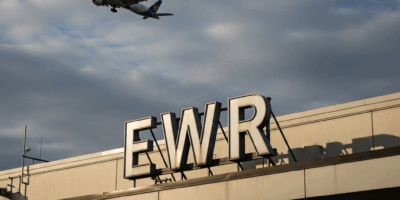
It started on a Spirit Airlines flight out of Miami — gate D37, middle seat, $9 carry-on fee I definitely did not see coming — when I looked down at my boarding pass and noticed something odd. MIA. Miami. Those three letters just… fit. So I started flipping through every other airport code I’d ever encountered, and that’s when the rabbit hole opened up. Chicago O’Hare is ORD. Los Angeles is LAX. Newark, New Jersey — a city literally named Newark — ended up as EWR. So a code like MIA, where the letters directly abbreviate the city name, isn’t normal. That’s a small miracle of bureaucratic timing.
How Miami International Got Its Code
Frustrated by a patchwork of regional shorthand systems, early American aviation borrowed two-letter identifiers straight from weather service frameworks. Pan American and other carriers in the 1930s used whatever local abbreviations made sense to whoever was writing the manifest. Then international air travel started scaling — fast — and the International Air Transport Association, IATA, moved to standardize everything globally with a three-letter system sometime in the late 1940s and into the 1950s.
Miami was already a serious commercial hub by then. The airport traces its roots to a site established in 1928, and Pan American World Airways made Miami a cornerstone of its entire Latin American operation throughout the 1930s. By the time the three-letter registry solidified, Miami International had weight. It got MIA. Clean, direct, three letters off the front of the city name — done.
Cities with short, phonetically distinct names locked in their abbreviations early, before the available namespace got crowded. That timing is the entire explanation. Simple as that.
Why the Letters MIA Were Still Available
IATA codes are globally unique — at least if you want to avoid catastrophic routing errors sending passengers to the wrong continent. Every code lives in one registry, and once an airport claims it, it’s gone. This is why the assignment process increasingly resembles a land grab the further you get from aviation’s early decades. Cities that formalized their airports late, or renamed them after already-prominent figures, had to work around whatever was already taken.
MIA was sitting there unclaimed when Miami International needed it because no other major airport anywhere in the world had grabbed those three letters first. Miami is distinctive enough — no other major city starts with those same phonemes — so there was no conflict, no negotiation, no compromise code.
Compare that to Orlando. Orlando International Airport is MCO. That O is right there. Orlando. But MCO traces back to McCoy Air Force Base, which closed in 1975 and got converted to civilian use. By the time Orlando needed a clean civilian identifier, the registry had constraints. The base name stuck. Now millions of people flying to Disney World stare at MCO on their boarding passes with absolutely no idea what it means. I was one of them for an embarrassing number of years. Don’t make my mistake.
Florida Airports and Why Their Codes Vary So Much
Florida is actually a useful case study here — maybe the best one in the country — because the state has a dense cluster of major airports showing the full range of how codes get assigned. Line them up:
- MIA — Miami International Airport. Three-letter abbreviation of the city. Clean.
- TPA — Tampa International Airport. First three letters of Tampa. Also clean, also locked in early.
- FLL — Fort Lauderdale-Hollywood International Airport. First two letters of Fort Lauderdale, doubled. Still readable once you know.
- PBI — Palm Beach International Airport. Initials-based rather than abbreviation-based, but traceable once you look for it.
- MCO — Orlando International Airport. McCoy. Former military base. Zero surface-level logic without that historical context.
The pattern that emerges is pretty clear. Airports that opened or formalized under civilian control early got intuitive codes. Airports converted from military installations — or renamed after prominent figures — got stranded with whatever the registry had already assigned. Florida just happens to have enough airports, and enough variety in their histories, that you can see the whole spectrum without ever leaving one state. That’s what makes Florida such an endearing case study for aviation nerds.
What MIA Actually Stands For and What It Does Not
Probably should have opened with this section, honestly, because it’s the thing people are genuinely wondering when they type the search.
MIA stands for Miami International Airport. That’s it. Three letters, direct abbreviation, nothing hidden underneath.
It does not stand for “missing in action.” That’s a military designation using the same three letters — and the overlap is a genuine coincidence, full stop. The military acronym and the airport code developed in completely separate contexts, through completely separate institutions, with no relationship to each other whatsoever. The airport code comes from IATA’s civil aviation registry. The military designation comes from Department of Defense casualty classification terminology. Same letters. Different universes.
I’m apparently the type of person who goes digging after a Spirit flight at 11pm, and that search instinct works for me while just accepting things never does. So after that gate D37 experience, I went looking for some deeper meaning — a founding figure with those initials, a former city name, anything. There’s nothing. MIA is MIA because Miami starts with M-I-A and the letters were available. That’s the complete answer.
Which, honestly, might be the most satisfying explanation in all of aviation geography. Sometimes the obvious answer is just correct. In a system full of ORDs and MCOs and EWRs, Miami got to keep it simple. So, without further ado — next time someone stares at their boarding pass confused, you’ll know exactly what to tell them.



Stay in the loop
Get the latest airport pin updates delivered to your inbox.