A Code That Stopped Making Sense Decades Ago
Airport codes have gotten complicated with all the misinformation flying around. Every time you book a flight to Chicago, you punch in ORD. Every airline ticket. Every airport app. Every ground transportation reservation. But ORD has nothing to do with O’Hare. Nothing to do with Chicago either, if we’re being literal. The airport’s official name is Chicago O’Hare International Airport. So why is the code still ORD?
As someone who spent three years working ground operations at a major carrier before switching careers entirely, I learned everything there is to know about this particular question. It came up maybe twice a year from curious passengers — at least the ones paying close enough attention to notice. Most staff didn’t know the answer. I didn’t either, for an embarrassingly long time. Today, I will share it all with you.
But what is an airport code, really? In essence, it’s a three-letter identifier the International Air Transport Association stamps on every commercial airport worldwide. But it’s much more than that. These codes embed themselves into every system that matters — flight schedules, ticketing platforms, baggage routing software, navigation databases going back decades. Changing one creates a cascade of problems nobody wants to solve. ORD is the perfect case study in how history outlasts logic.
Orchard Field Was Here First
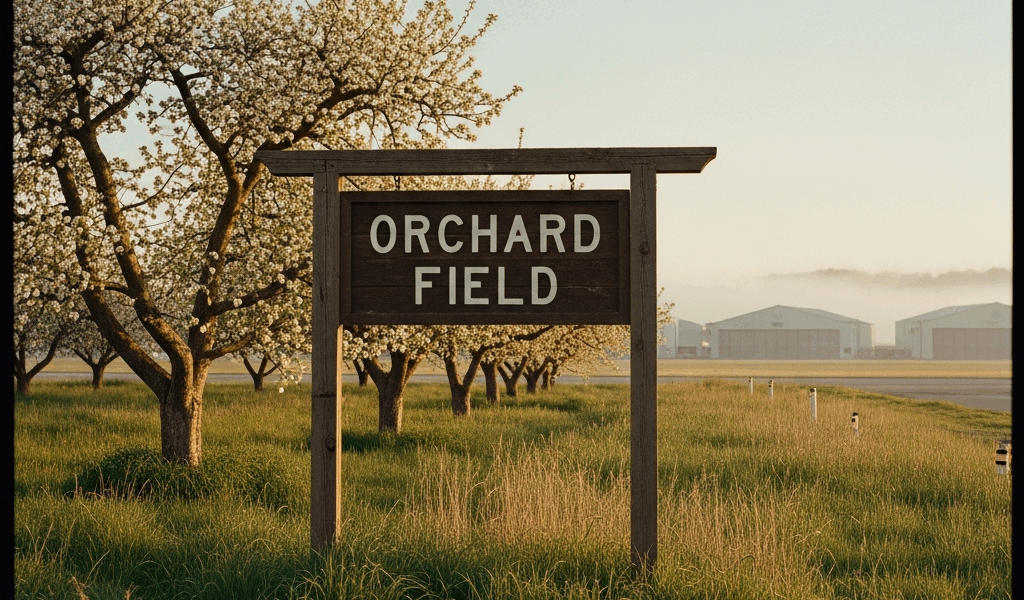
Before O’Hare International existed, before Butch O’Hare’s name meant anything to Chicagoans, there was Orchard Field. Not Orchard Park. Not Orchard Grove. Orchard Field — a Douglas Aircraft Company facility that opened sometime in the early 1940s on Chicago’s northwest side.
Frustrated by the shortage of military aircraft production space, Douglas Aircraft acquired what had essentially been farmland and constructed the airfield from scratch, naming it after the orchards that had occupied the terrain before concrete and tarmac arrived. The IATA code ORD came with it. That was probably 1943, give or take. Civilian air traffic was minimal anyway — most operations were military or military-contracted work, and few people outside the aviation industry even knew the place existed.
Then everything changed. The city of Chicago looked at its post-war future and saw something clear: civil aviation was about to explode. Jet engines were coming. Transatlantic routes would become routine. The old Midway Airport, serving Chicago since 1927, was landlocked and hemmed in by neighborhoods with nowhere to expand. Orchard Field, on the other hand, sat on roughly 4,500 acres of undeveloped land with room to grow in every direction.
Chicago made the decision to develop Orchard Field as the city’s primary commercial airport. A bold bet on the future. It paid off.
How a War Hero Changed the Airport’s Name
The city renamed Orchard Field in 1949. Not after a mayor or a railroad magnate. They named it after Edward Henry “Butch” O’Hare Jr. — Lieutenant Commander, Navy pilot, Medal of Honor recipient, and a kid who grew up right there in Chicago.
O’Hare’s story is the kind that sticks with you. Born in 1914, he flew Grumman F6F Hellcats in the Pacific Theater. On November 26, 1943, near Rabaul, he shot down five Japanese aircraft in roughly twelve minutes — a single combat engagement that earned him both the Navy Cross and the Medal of Honor. He died in combat later that same year. Thirty-nine years old. Gone.
Naming the airport after him felt right to city officials, and honestly, it’s hard to argue. It honored a local hero, connected Chicago’s infrastructure to genuine American valor, and gave a rapidly expanding facility something more resonant than “Orchard Field,” which sounded bucolic and small — more apple stand than international gateway.
By 1950 the renaming was complete. Newspapers ran the story. Officials made speeches. The public embraced it. Everyone called it O’Hare.
But the IATA code — the three-letter designation that airlines, pilots, and baggage handlers used every single day — remained ORD. Apparently nobody blinked.
Why the Code Did Not Change With the Name
Probably should have opened with this section, honestly, because this is the real answer to your question.
By 1950, aviation infrastructure had already begun its digital evolution. Airlines were running punch-card systems and early computer databases — IBM 650 machines, clunky and expensive at around $3,500 a month to lease — to track flights and manage bookings. Every major carrier had ORD hardcoded into their ticketing systems. Every baggage routing network recognized ORD. Every reservation document, every flight schedule, every piece of operational paperwork referred to that three-letter code.
Changing it would have required coordinating a global update across hundreds of airlines, thousands of travel agencies, and multiple aviation authorities simultaneously. The cost would have been astronomical. The error risk — misrouted luggage, missed connections, booking chaos across dozens of countries — was simply unacceptable. And what would they even change it to? OHA? OHR? Neither carried the established familiarity ORD had already built over a decade of use.
So the decision, pragmatic and essentially silent, was made. The airport’s legal name would be O’Hare International. The code would stay ORD. Permanently. Don’t make my mistake of assuming anyone in a position of authority ever formally announced this — they didn’t. It just became the way things were.
That’s what makes airport codes endearing to us aviation nerds. They’re not random. They’re amber. History frozen in a three-letter string that the whole world uses without thinking twice.
Other Airport Codes That Tell the Same Kind of Story
So, without further ado, let’s dive in — because ORD is far from the only offender here.
MCO — Orlando International. The code comes from McCoy Air Force Base, which shuttered in 1975. The airport serving Orlando today was built on the former base footprint, and the original code stuck even though McCoy has been defunct for fifty years. Thousands of flights daily still use MCO. Nobody will ever change it.
EWR — Newark Liberty International. Founded as Newark Metropolitan Airport, the facility cycled through multiple name changes before landing on Newark Liberty International. But EWR, derived from the original designation, never moved. I’m apparently someone who flies into New Jersey four times a year for work, and EWR works for me while the name “Liberty” never quite registers. The code is just the code.
YYZ — Toronto Pearson International. This one’s stranger. YYZ comes from an old Toronto radio beacon designation — not even from an airport name, but from a navigational waypoint identifier. The airport was renamed Pearson decades ago. YYZ remains. Rush even wrote a song about it. The code outlasted the logic, outlasted the beacon, outlasted any reasonable explanation.
Each of these codes is a historical artifact. Once something gets embedded in infrastructure at scale — especially global aviation infrastructure running across 190 countries — the friction to change it becomes nearly insurmountable. ORD is just the most recognizable example, the one passengers notice because O’Hare is one of the ten busiest airports on earth.
Next time you land at O’Hare and see those three letters on your boarding pass, you’ll know exactly what you’re looking at. Not a mistake. Not a clerical error that slipped through. History that nobody ever got around to replacing — and at this point, probably never will.


Stay in the loop
Get the latest airport pin updates delivered to your inbox.