
The Airport Everyone Calls DIA but Books as DEN
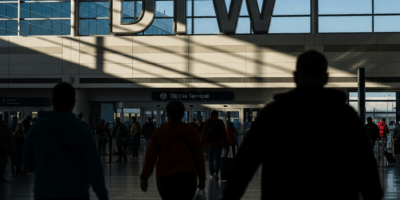
Denver airport naming has gotten messy with all the conflicting signage and local slang flying around. Your Uber driver says DIA. The shuttle van plastered with ads says DIA. The guy at baggage claim says DIA. But the boarding pass crumpled in your jacket pocket? That says DEN — every single time, no exceptions.
I’ve watched the confusion unfold more times than I can count. Travelers pull up their confirmation email, stare at the three letters, and genuinely wonder if they booked the wrong airport. Totally understandable reaction. It’s not a mistake, though. The mismatch between DIA and DEN is actually one of the most-searched airport code questions on the internet, and the real answer says a lot about how aviation bureaucracy thinks — which is to say, very differently from the rest of us.
Short version: airport codes represent cities, not buildings. DEN was assigned to Denver long before the current airport poured its first concrete slab. When Denver International opened in 1995, it simply inherited the code. The name DIA caught on locally anyway — and nobody in the IATA office lost any sleep over it.
So, without further ado, let’s dive in.
How Airport Codes Actually Get Assigned
The International Air Transport Association — IATA, if you want to sound like you work in aviation — assigns three-letter codes to airports worldwide. These codes run everything behind the scenes: ticketing, baggage routing, gate assignments, flight operations databases. The whole machine depends on them.
But what is an IATA code, really? In essence, it’s a city identifier. But it’s much more than that. Chicago’s O’Hare is ORD. Los Angeles International is LAX. Orlando’s main airport is MCO — which stands for nothing remotely Orlando-related, but that’s a separate conversation entirely. None of these codes literally reflect the airport’s official name. They reflect where you’re going, not what the terminal is called.
Once IATA assigns a code to a city, that code sticks — even if the airport relocates, gets renamed, or gets replaced entirely by a newer facility. The FAA uses its own separate identifier system, which is why you occasionally see two different codes floating around for the same airport depending on who’s doing the listing. For commercial airline purposes, though? IATA codes are the only ones that matter. That’s what prints on your boarding pass.
Denver’s code attached itself to the city decades before anyone broke ground on the current terminal. That history is exactly why the DEN vs. DIA situation exists.
Why DEN Won and Not DIA
Quick callout up front. It’s where the whole thing actually makes sense.
Denver’s original commercial airport was Stapleton International Airport. Opened in 1929, operated for 66 years, handled millions of passengers on a footprint that eventually got swallowed by Denver’s urban sprawl. Stapleton held the IATA code DEN — not because of anything clever, but because DEN represented Denver, full stop. The facility’s name was irrelevant to the code.
By the late 1980s, Stapleton was struggling. Too small, too loud for the surrounding neighborhoods, no room to expand. Denver decided to build from scratch about 25 miles northeast of downtown — a massive project that eventually cost somewhere around $4.8 billion and opened February 28, 1995. They called it Denver International Airport. Logical name. Made perfect sense. But IATA didn’t issue a fresh code called DIA for the shiny new building.
Instead, DEN transferred directly to the new facility. The continuity illustrates why an established IATA code can survive a new facility or airport rebrand. The code represents the destination city, and Denver was still Denver. Same city, new terminal, same three letters.
Local shorthand filled the gap naturally. Denver residents started calling it DIA — short for Denver International Airport, the facility’s actual official name. Linguistically, it tracks. Intuitively, it makes sense. But IATA doesn’t assign codes based on what sounds logical to the people living nearby. DEN was already embedded in every airline database, every baggage system, every route map on the planet. Creating a competing DIA code would have meant rewriting all of it — thousands of system entries, decades of infrastructure, reprinted materials across hundreds of carriers worldwide. For what? The city didn’t move. Only the building did.
What Happened to Stapleton and Its Code
Stapleton International Airport flew its last commercial departure on March 31, 1995. That was it — six decades of operations, gone in an afternoon. The site eventually redeveloped into a mixed-use neighborhood still called Stapleton, which technically got renamed Central Park in 2019. Denver’s memory is apparently short.
Here’s the part that surprises most people: Denver International Airport opened February 28, 1995 — a full month before Stapleton closed. For roughly four weeks, Denver had two major commercial airports running simultaneously. Stapleton was winding down its final operations while DEN was already processing arrivals at the new terminal 25 miles away. Bit of an awkward overlap, logistically speaking.
The DEN code moved cleanly from Stapleton to Denver International the moment the new airport became Denver’s primary hub. No gap in the system. No ambiguity. The transfer was seamless — because the code was always about Denver, not about Stapleton specifically.
That transition is the clearest possible illustration of how airport codes actually function. The facility is replaceable. The city designation isn’t.
So Should You Call It DEN or DIA
I’m apparently someone who has argued about this in airport bars, and DEN works for me while DIA never appears on anything official — so here’s the practical breakdown.
On your ticket, boarding pass, baggage tag, or any airline document anywhere on earth: it’s DEN. Full stop. Every carrier, every booking platform, every flight tracking app uses DEN. If you’re searching for your confirmation and typing DIA into anything aviation-related, you’re going to confuse yourself unnecessarily. Learn from what tripped me up.
Locally, though? DIA is fine. Completely normal. Denverites use it constantly — local news, radio traffic reports, casual conversation, airport shuttle signage. The nickname is baked into Denver’s regional vocabulary at this point. Nobody is going to correct you at a dinner party for saying DIA.
DEN might be the best option for anything booking-related, as airport travel requires finding the right confirmation fast. That is because the official website, FAA designations, and every international flight system all run on DEN — not DIA. The airport itself uses DEN in official capacity. Their own web URLs use DEN.
DIA is the colloquial shorthand. DEN is the functional identifier. Both refer to the same giant terminal with the tent roof you can spot from the highway. Now you know exactly why both exist — and why only one of them will ever show up on your boarding pass.


Stay in the loop
Get the latest airport pin updates delivered to your inbox.