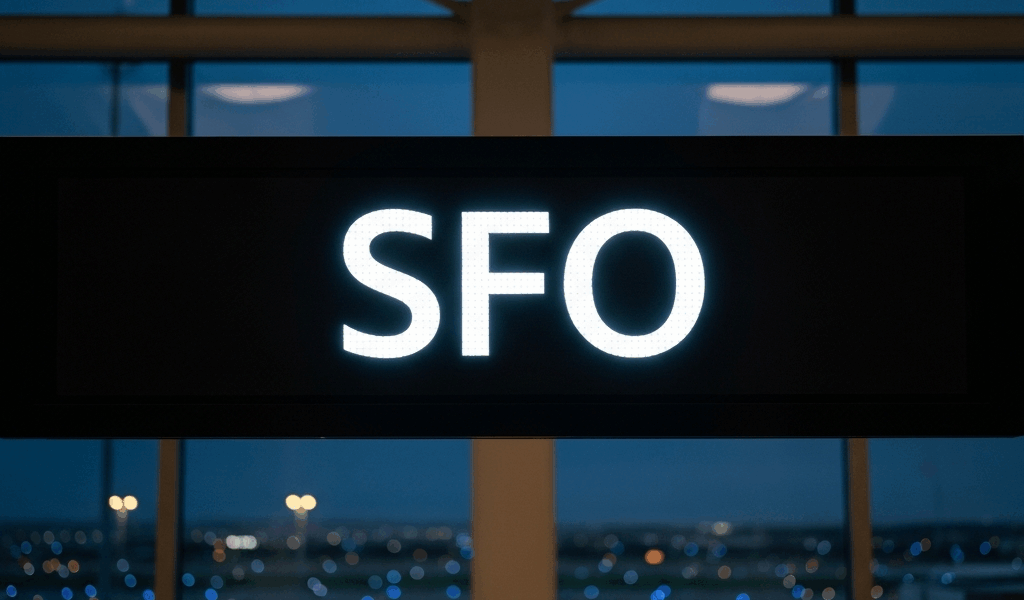
The Obvious Question Nobody Asks the Airport
I’ve asked this question to at least a dozen people while waiting in the baggage claim area at SFO, and every single time, I get the same confused look. “Why SFO and not SF?” It’s one of those things that sounds absurd once you voice it out loud, yet somehow makes perfect sense in the moment. You’re flying into San Francisco. The city abbreviation is SF. So logically, shouldn’t the airport code be SF?
The gap between expectation and reality is real — it bothers people enough that they search for it. And honestly, when I first started digging into airport codes a few years back, I realized nobody actually explains this well. Everyone just accepts SFO without questioning the logic.
But there’s a system here. A real one. And it’s stranger than you’d think.
How IATA Airport Codes Actually Work
Three-letter IATA codes aren’t automatic city abbreviations. That’s the first thing to understand. The International Air Transport Association assigned these codes starting in the 1930s, and their priority was nothing like what you’d expect.
Yes, some codes match perfectly. Los Angeles International is LAX. New York’s JFK airport is, well, JFK. Chicago’s O’Hare is ORD — that one’s weirder, honestly. Denver International is DEN. These feel intuitive because they align with how we already abbreviate those cities.
Coincidence more than rule, though.
The whole system got built forward from a single need: distinguish one airport from another, anywhere on Earth, using exactly three letters. If LAX worked for Los Angeles, great. If DEN worked for Denver, fine. But the system wasn’t built backward from city names. It was built to create globally unique identifiers and nothing more.
This created some genuinely odd codes. Toronto’s Pearson International is YYZ. Montreal’s Pierre Elliott Trudeau is YUL. Istanbul’s main airport is IST. Rome is FCO — no, seriously. Bangkok is BKK, but Madrid is MAD, and Moscow Sheremetyevo is SVO. Some codes honor historical names or landmarks. Some are phonetically close to city names. Others seem almost random. The system worked because it created absolute uniqueness.
And San Francisco’s airport? It’s SFO. Not SF.
Why San Francisco Got SFO Specifically
San Francisco International Airport opened in its current location in 1927, though the facility expanded dramatically through the 1950s and 60s. When IATA began assigning three-letter codes in the late 1930s and early 1940s, the airport was already operating.
Here’s where it gets interesting: Oakland International Airport exists 10 miles across the bay. Its code is OAK. The three-letter requirement meant SF wasn’t an option from day one — the system demanded three letters, period. Never two. Never four. Three.
So the airport needed a three-letter identifier, and SFO was what got assigned. The O likely came from “International” or simply because it completed the requirement while remaining phonetically close to how people referred to the city. Probably should have opened with this section, honestly — the why is actually simpler than the how.
Some sources suggest the O was added to avoid conflicts with other potential codes, but IATA records from that era are sparse. What we do know: SFO became official in the 1940s and has stuck around for over 80 years now. That’s generations of travelers who’ve internalized it as simply how things are.
The SF Problem That Airports Solved
Two-letter airport codes existed before three-letter ones became standard. But they had a massive problem: there aren’t enough unique two-letter combinations to cover every airport on Earth.
There are only 676 possible two-letter codes using the English alphabet (26 × 26). Add numbers, and you expand options, but mixing letters and numbers creates confusion in radio communication, ticket printing, and baggage handling. A pilot hearing “SF” versus “SFO” could easily misunderstand.
Three letters gave IATA 17,576 possible combinations. Suddenly, every airport could have a unique code, and there was zero chance of miscommunication. A baggage handler in Singapore knows exactly what SFO means. An airline in Berlin knows exactly what gate to send an SFO-bound passenger to. That’s what makes the three-letter system endearing to aviation professionals.
If SFO had stuck with SF, what happens next? When a second airport needs an identifier starting with S and F? Maybe Santa Fe gets Santa Fe Regional someday. Maybe it becomes SF2 or SFX. The system breaks. Consistency fails. Human error increases. And in aviation, human error can matter.
The three-letter requirement solved this by design — it wasn’t arbitrary, it was defensive.
What Most People Get Wrong About SFO
I’ve heard several false explanations for why SFO exists, and they’re worth addressing directly because they’re believable enough to circulate.
Myth one: “SFO stands for San Francisco Only.” It doesn’t. The O has no official meaning in IATA documentation. Some people assign it retroactively to make the code feel logical, but that’s reverse engineering, not history.
Myth two: “The code honors a landmark or street.” I’ve heard people claim the O represents the Embarcadero, or that SFO originally stood for “San Francisco Overland.” These are urban legends. The code was assigned by IATA as a three-letter identifier, and whatever story people layer on top is pure invention.
Myth three: “It was changed from SF to SFO because of a conflict.” This one’s seductive because it implies a specific story. In reality, SF was never the official IATA code. The system required three letters from the beginning of standardized coding. There was no change — just the original assignment.
Myth four: “Other cities like Los Angeles fought to keep their two-letter codes and won.” Los Angeles was never assigned a two-letter code by IATA. It went straight to LAX when the three-letter system was implemented. The idea that some cities negotiated exemptions is fiction.
These myths persist because people want codes to mean something concrete. SF is San Francisco — clean, simple, intuitive. SFO is harder to reverse engineer, so people invent explanations. The real reason? Far less dramatic: the system was three letters from day one.
Honestly, I spent a full day convinced the O had some official meaning. I checked IATA archives, read regulatory documents, found nothing. The code exists because the international aviation system needed globally unique three-letter identifiers, and SFO fit that requirement. That’s it.
The bigger lesson here? Airport codes aren’t intuitive because they weren’t designed for passengers. They were designed for pilots, dispatchers, baggage systems, and airline infrastructure. SFO might seem odd from a passenger perspective, but it’s perfect from a systems perspective. Every major airport on Earth has a three-letter code. No ambiguity. No confusion. Just functional clarity.
Next time you’re at SFO, that code makes sense.

Stay in the loop
Get the latest airport pin updates delivered to your inbox.