“`html
What PHX Stands For and Why It Matters
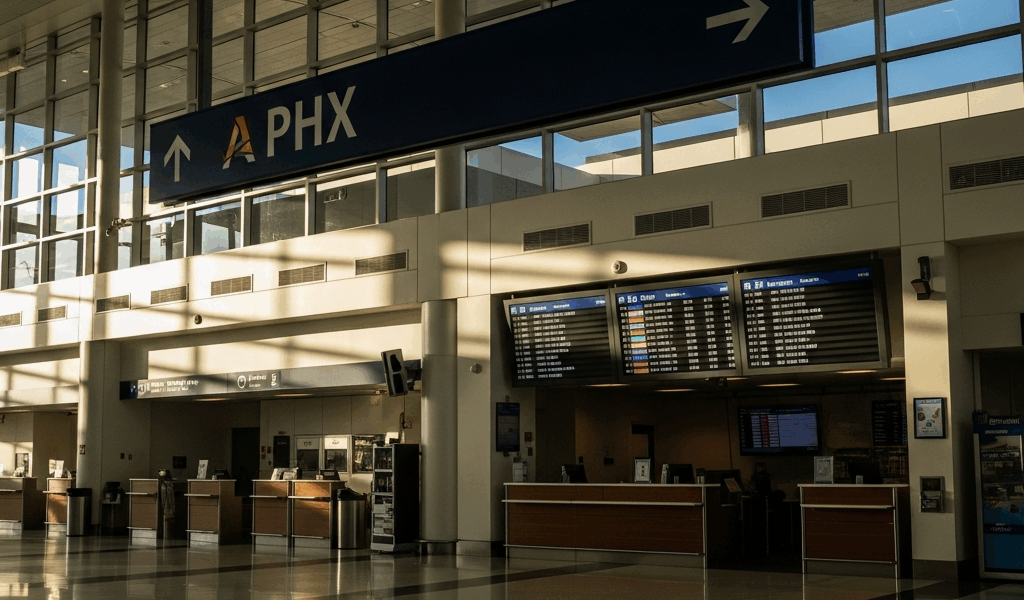
PHX has gotten complicated with all the airport codes flying around. It’s the IATA designation for Phoenix Sky Harbor International Airport — and if you’re booking a flight to Arizona’s capital, this three-letter abbreviation will show up on your ticket, baggage tag, and boarding pass. But that’s only scratching the surface of why it actually matters.
Phoenix Sky Harbor sits three miles south of downtown Phoenix and ranks among the busiest airports in the United States. Pre-pandemic, the facility handled over 45 million passengers annually. It’s maintained that volume as travel rebounded. For context — that puts PHX in the same tier as Denver (DEN) and Dallas (DAL). Most of that traffic flows through Southwest Airlines, which operates PHX as one of its major hubs. Translation: if you’re connecting through Phoenix, you’ll see more Boeing 737s than any other aircraft type.
The “Sky Harbor” nickname came from the airport’s historical role as a refuge for aircraft during dust storms sweeping across the Arizona desert. That branding stuck in 1932 and became official decades later. Today, the three-letter code PHX is what matters operationally. When you’re checking your confirmation email at 11 PM the night before travel, PHX is what you’re verifying. When the gate agent calls for boarding, they’re routing passengers through PHX’s specific terminal structure, not some theoretical Phoenix airport.
Here’s the distinction: Phoenix actually has two commercial airports. Phoenix-Mesa Gateway Airport uses code AZA and handles smaller operations. But Sky Harbor is the major one — that’s PHX. Knowing you’re landing at PHX tells you which facility you’ll navigate, which carriers serve it, and what ground transportation options actually exist at that specific location.
Terminal Layout and Airline Assignments
Confused by airport terminals? I was too — until I missed a connection by wandering into the wrong terminal at 6 AM. Probably should have opened with this section, honestly.
Phoenix Sky Harbor operates two main commercial terminals: Terminal 3 and Terminal 4. Terminal 3 handles the vast majority of domestic traffic. Southwest Airlines, the airport’s largest carrier by far, dominates Terminal 3 with gates spanning the full length of the facility. Connecting between two Southwest flights? You’re staying in Terminal 3. Other domestic carriers at Terminal 3 include Alaska Airlines, Frontier, Spirit, and American (limited gates). United also operates from Terminal 3.
Terminal 4 serves international routes and some premium domestic service. American Airlines, Delta, and United international flights typically depart from Terminal 4. This terminal also houses most of the airport’s higher-end dining and retail — relevant if your connection has you stuck for three hours. Terminal 4 includes a Priority Pass lounge operated by American Express, so if you’re a cardholder, you can access shower facilities and decent coffee without paying an airline-specific lounge membership.
TSA checkpoints exist at both terminals. Terminal 3’s checkpoints are typically less congested than Terminal 4’s, though both can back up during peak travel windows — roughly 5–8 AM and 4–7 PM. TSA PreCheck-eligible travelers should use the dedicated lane; wait times drop significantly. Mobile ordering food vendors operate in both terminals, with chains like Dig, Chopt, and local spots like True Food Kitchen (Terminal 4). Terminal 3 has fewer upscale options but handles volume better.
Here’s a practical detail that actually matters: Terminal 3’s gates run from roughly 1–30. Terminal 4 gates run higher. When your airline sends a gate assignment, the gate number tells you which terminal before you leave your Uber. Gate 8? Terminal 3. Gate 47? Terminal 4. This saves the 15-minute wrong-terminal sprint.
Ground Transportation From PHX
Getting from PHX to your final destination is straightforward — assuming you understand the layout upfront.
Rental car services operate off-site at PHX. You’ll exit the terminal, follow signs to the rental car center, and catch a dedicated shuttle. The ride takes about 10 minutes from the terminal. Returning is equally simple: you turn in your keys and catch a return shuttle back to the terminal. Hertz, Enterprise, Avis, and Budget all operate here. Rates typically start around $35–45 per day for compact cars during off-peak periods. Weekend rates and peak travel can double that.
Rideshare (Uber, Lyft) has a dedicated pickup zone outside the terminal. Follow “Ride Share” signage and you’ll find a separate lot where drivers wait. Pickup times average 5–10 minutes. The ride to downtown Phoenix or Scottsdale typically costs $18–28 depending on time of day and surge pricing. This usually beats waiting for a rental car shuttle if you’re traveling solo or with one other person.
Taxis line up outside both terminals with regulated rates. Expect $25–35 to downtown Phoenix, though this moves slower than rideshare during most hours.
Public transit option worth considering: Valley Metro Light Rail connects PHX directly to downtown Phoenix and Tempe. The trip takes about 45 minutes to downtown but costs only $4. Trains run every 15 minutes during peak hours, every 20 during off-peak. This is the cheapest option and works well for travelers heading to central Phoenix locations. The light rail station is located outside both terminals with clear signage. Fair warning: it’s slower, and luggage gets crowded during rush hours.
Decision framework: Solo traveler heading downtown? Light rail saves money. Two people heading to Scottsdale? Rideshare wins on speed. Family of four renting a car? Shuttle to the rental lot and plan for 10 minutes in your arrival window.
Best Seats and Gates for PHX Connections
Connecting flights at PHX require strategy. Not all gates are created equal.
Tight connection (90 minutes or less)? Request a seat in the forward cabin near your departure gate cluster. Southwest flights boarding from gates 1–15 sit at one end of Terminal 3. Exiting from gate 25 and connecting to gate 5 means a 10-minute walk minimum. Southwest’s boarding process is chaotic with open seating, so forward cabin positions exit faster.
Longer connections (3+ hours)? Book middle or rear cabin seating. Gate 15 positioning gives you access to the retail and dining cluster. Food options, bathrooms, and retail shops congregate near gates 15–20 in Terminal 3. That’s where you want to spend a three-hour layover, not at gate 1 staring at the tarmac.
Light rail connection note: Terminal 3 to Terminal 4 connections are faster via light rail than walking and navigating corridors. The light rail station serves both terminals and takes about 5 minutes to traverse. For a 90-minute connection between terminals, this makes a meaningful difference.
Download SkyHarbor’s official terminal maps before you fly. Screenshot gate layouts. You’ll know your routing before landing.
TSA, Security, and Passenger Experience at PHX
Security wait times at PHX average 8–15 minutes during off-peak hours (late afternoon, early evening). During peak windows (early morning, holiday periods), expect 25–35 minutes. TSA PreCheck lines move significantly faster — typically 3–5 minutes regardless of time of day. If you fly more than twice yearly, TSA PreCheck ($78 for five years) pays for itself in saved time.
CLEAR (the biometric scanning service) operates at PHX and cuts security time further. You skip the document check line and go straight to biometric verification and screening. Cost is roughly $180 per year, though frequent travelers find it worth the premium for guaranteed sub-5-minute processing.
Mobile ID is accepted at PHX. If you have a digital driver’s license on your phone, use it at security. It speeds up verification and reduces paper handling.
Family security lines exist at both terminals — separate from standard lanes. Traveling with young children? Ask TSA agents where these are located. They move faster because experienced officers staff them and understand family logistics with strollers and multiple bags.
One practical note: arrive at PHX 2 hours before domestic flights, 3 hours before international departures. These windows account for average security wait times plus the time needed to reach your gate. Connecting with a tight timeline? Add 30 minutes to your internal connection window for security rescreening if you’re arriving on an international flight.
PHX is a straightforward airport operationally. Understanding the terminal structure, airline allocations, and ground transportation options eliminates arrival-day confusion. Use this guide to plan before you book — it’s the difference between a stressful layover and a smooth connection.
“`


Stay in the loop
Get the latest airport pin updates delivered to your inbox.