LAS Is the Code — Here Is Why That Matters
Airport codes have changed quite a bit thanks to the rebranding noise flying around — especially when the code itself never actually changes.
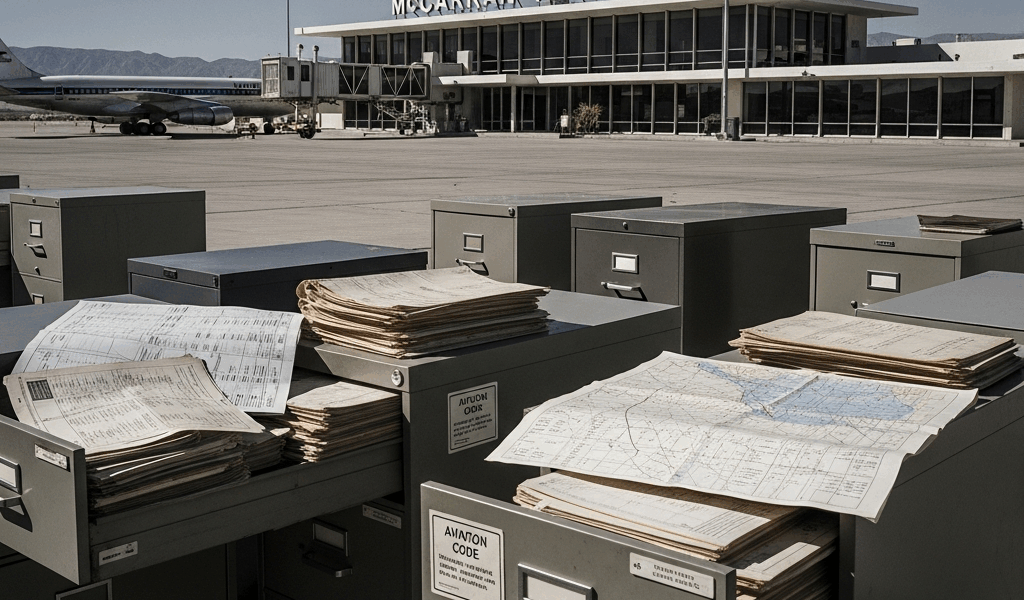
I spotted it on a baggage tag in 2015. Standing in baggage claim at what was still called McCarran International, I stared at three letters that made absolutely no sense to me. LAS. Not LVA. Not LVS. Las Vegas is two words, neither of which is “las.” I pulled out my phone and started digging. Forty minutes later I had gone from curious to genuinely fascinated — and I haven’t stopped thinking about it since. Today, I’ll share everything I found.
The real answer involves weather stations, bureaucratic timing, and infrastructure so deeply embedded that two full rebrands couldn’t touch it. Las Vegas is the perfect case study for how these things work — and why they never get fixed.
How Airport Codes Were Assigned in the Early Days
Airport codes weren’t originally about cities at all. Before IATA standardized three-letter identifiers in the 1930s, the whole system was genuinely messy.
The National Weather Service had spent decades building out two-letter station identifiers. Geographic shorthand — derived from city names, landmarks, whatever made sense locally at the time. When commercial aviation needed a standardized system fast, they borrowed from what already existed. Speed mattered. Logic was secondary.
Frustrated by the lack of any consistent naming structure, early aviation administrators essentially grabbed the weather station codes off the shelf and added a letter. Las Vegas’s weather station wasn’t “LV.” It was called Las. That single identifier became the foundation for everything that followed. This new standardization took off through the late 1930s and eventually evolved into the three-letter system travelers know and curse today when codes don’t match city names.
Worth flagging before going further. It explains why so many codes feel random. They’re not random. They’re just old.
What LAS Actually Stands For
But what is LAS, exactly? In essence, it’s the original weather station designation for Las Vegas — predating commercial aviation entirely. But it’s much more than that. It’s a timestamp. A fossil. Three letters that tell you exactly when the modern aviation system was born.
When McCarran Field opened in 1942, LAS was already waiting. Nobody debated it. The code existed, the airport needed a code, done. Then in 1968 the airport became McCarran International. Still LAS. New name, same tag on every bag flying in from Chicago or New York or London.
Then 2021 arrived. Nevada officially renamed the facility Harry Reid International Airport — honoring the late senator who represented the state for thirty years. New signage went up. Official documents were reprinted. The branding shifted completely. But LAS? Untouched. Still on every ticket. Still printing off baggage belt systems at Terminal 1. Still embedded in reservation databases across roughly 200 airlines worldwide.
Two rebrands. Zero code changes. The unchanged LAS code demonstrates how durable an established airport identifier can be through multiple rebrands.
Why the Code Was Never Changed Even After Rebranding
Changing an IATA code sounds trivially easy. Three letters. How hard could it be?
Devastatingly hard. Avoid the path I took of assuming otherwise.
Every airline — Delta, British Airways, Frontier, Spirit, all of them — stores LAS across millions of existing booking records. Every baggage handling system prints it. Every ground crew tablet references it. Every gate agent’s terminal is trained on it. I’m apparently someone who once spent an afternoon talking to an airline IT contractor at a Denver bar, and she described legacy reservation architecture as “basically concrete.” You don’t repour concrete on a Tuesday.
Then there are the consumer platforms. Kayak, Expedia, Google Flights — all indexed by code. Change the code and you break historical search data. You create duplicate airport entries. You confuse price comparison algorithms that have been running since roughly 2003.
The physical signage alone runs into serious money. A full airport rebrand — just the name change, not the code — costs tens of millions of dollars and takes years. Wayfinding throughout the terminals, parking structure signage, rental car shuttle markers, departure boards. Harry Reid went through exactly that process after 2021. Changing the code would mean doing much of that work a second time, for a facility handling around 40 million passengers annually. So, without further ado, let’s just admit it: nobody was ever going to do that.
LAS stuck. Cheaper. Safer. Known everywhere. The airport changed names twice and the code never flinched.
Other Vegas Airport Facts Worth Knowing
While you won’t need a pilot’s license to understand this part, you will need a handful of context. The IATA code is LAS — that’s what you use when booking flights. The ICAO code is KLAS — four letters, used by pilots and air traffic control, where the K prefix simply means United States. Two parallel systems, both running simultaneously, confusing roughly every traveler who sees both on a document and wonders which one actually matters. IATA for booking. ICAO for flying. That’s the whole answer.
Harry Reid International ranks as the eighth-busiest airport in North America by passenger volume. Forty million people annually — give or take. That scale makes any hypothetical code migration exponentially worse. Moving a small regional airport to a new identifier is difficult. Moving a top-ten North American hub is systemic disruption at a scale no aviation authority wants to authorize.
First, you should understand that IATA codes almost never change voluntarily — at least if you want to grasp why LAS has survived this long. Codes get retired when airports close. They get reassigned occasionally when new facilities open. But renaming a code mid-operation, at a functioning major hub? Genuinely almost unprecedented.
LAS will be the code for Las Vegas for the rest of your life. Probably your kids’ lives too. It emerged from a weather station that existed before Las Vegas was anything more than a small desert railroad stop — before the casinos, before the Strip, before 40 million annual visitors. It survived two rebrands, eight decades of aviation evolution, and the complete reinvention of the city it serves. That’s the power of entrenched infrastructure. Once a code locks in, it doesn’t unlock. Ever.



Stay in the loop
Get the latest airport pin updates delivered to your inbox.