Long Beach Airport — Why Locals Swear By It
Flying out of Southern California has gotten complicated with all the crowds flying around. LAX is a zoo. Burbank’s fine but limited. Ontario’s out in the Inland Empire. But Long Beach? Long Beach is the airport that people who actually live in LA County quietly recommend to each other, like some kind of travel secret nobody wants to blow up.
I flew out of LGB for the first time about six years ago — a Southwest flight to Oakland — and I remember walking from the parking lot to my gate in maybe twelve minutes. Twelve minutes. At LAX that wouldn’t even get you through the Uber drop-off lane. I’ve been a convert ever since.
A Bit of History — Daugherty Field
Long Beach Airport’s official name is Long Beach /Daugherty Field, named after Earl Daugherty, a barnstormer and early aviation pioneer who operated from the site in the 1920s. The airport itself dates back to 1923, making it one of the oldest municipal airports in the country. Let that sink in — this place has been handling aircraft for over a hundred years.
During World War II, the Douglas Aircraft Company had a massive manufacturing plant adjacent to the airport. They built thousands of military aircraft there, including the legendary C-47 transport. After the war, the facility shifted to commercial aviation and Douglas — later McDonnell Douglas, then Boeing — continued operations at the site for decades. If you look closely at the airport grounds, you can still sense that industrial heritage baked into the layout.
Probably should have led with this — LGB has a fascinating tension between its aviation history and the residential neighborhoods that grew up around it. That tension has shaped almost every decision the airport has made for the past fifty years.
The LAX Alternative
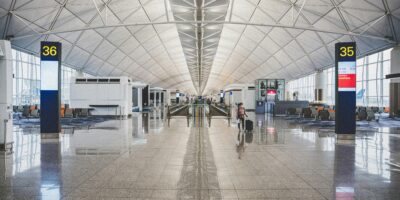
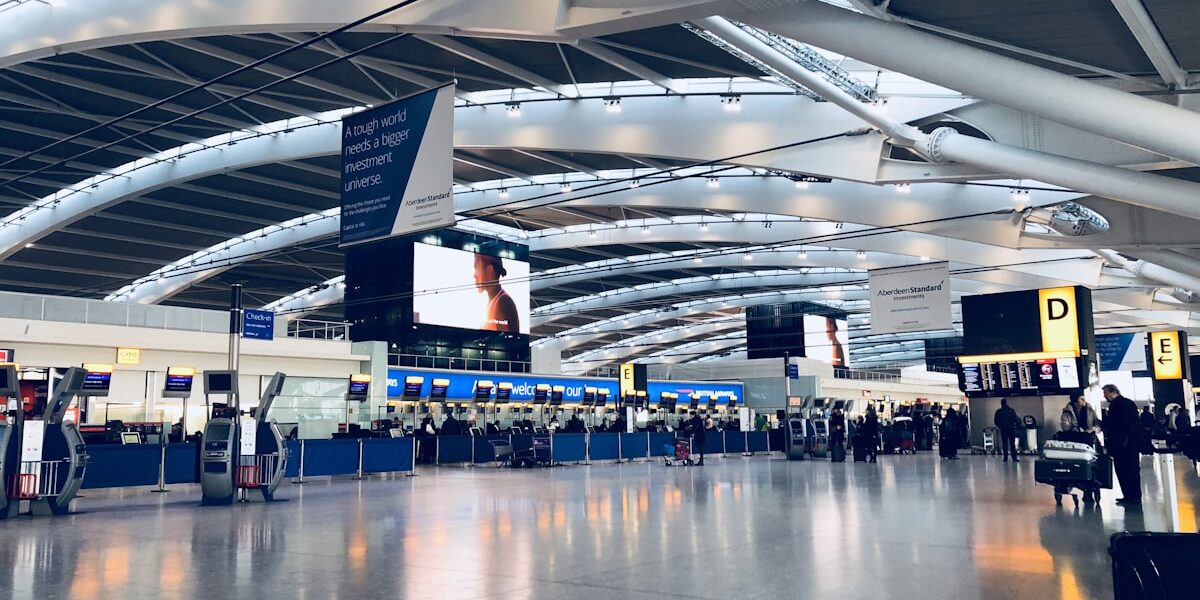
Let’s be honest about why most people care about Long Beach Airport: it’s not LAX. The terminal is small and mostly open-air, with a midcentury aesthetic that feels more like a regional bus station than an international airport — and I mean that as a compliment. You park close. Security lines are short. The gates are right there. On a good day you can arrive 45 minutes before departure and feel relaxed about it.
The airport handles around 3 to 4 million passengers a year, which sounds like a lot until you compare it to LAX’s 88 million. That difference in scale is everything. It’s the difference between a stressful, anxiety-inducing travel day and one where you actually show up to your destination in a decent mood.
Southwest Airlines is the dominant carrier at LGB, operating most of the flights. JetBlue also has a presence, along with a few other carriers that rotate in and out. You’re not going to find direct flights to Tokyo from here, but for domestic travel — especially up and down the West Coast — it’s hard to beat.
Facilities and Layout
The terminal has a historic Art Deco main building that’s been preserved and renovated. It’s genuinely beautiful, and the city takes pride in maintaining it. There’s a more modern concourse area for departures and arrivals, but even that keeps things understated. You’ll find a few food and drink options — not a massive food court, just enough to grab a coffee or a sandwich before your flight.
Parking is straightforward. There’s a main lot right across from the terminal, and prices are reasonable by Southern California standards. I’ve parked there for a long weekend trip and paid less than I would for one day at LAX’s structure. The rental car facilities are nearby too, all compact and walkable.
On the general aviation side, LGB is actually a busy field. Several FBOs operate there, handling private jets and charter flights. The airport has two main runways — the longer one stretches about 10,000 feet, which can accommodate pretty large aircraft. Corporate aviation traffic is steady, partly because of the airport’s proximity to the ports and the business districts of Long Beach and Orange County.
The Noise Situation
Here’s where things get interesting, and a little contentious. Long Beach Airport operates under a strict noise ordinance that’s been in place since the early 1980s. There’s a cap on the number of flights per day — about 50 commercial slots, give or take — and strict curfew hours. Airlines that violate the noise limits get fined.
This is great for the surrounding neighborhoods, which are some of the nicest in Long Beach. But it also limits the airport’s growth. Airlines that want to add routes hit up against the slot restrictions. It’s a genuine trade-off, and reasonable people disagree about where the balance should be. I get both sides. You don’t want your residential neighborhood shaking every five minutes, but you also want a functioning airport that offers competitive fares and destinations.
The city has studied various proposals over the years to modernize the noise ordinance while still protecting residents. It’s an ongoing conversation.
Community Connection
That’s what makes Long Beach Airport endearing — it actually feels like it belongs to the community. It’s not some sterile, corporate mega-facility designed for maximum throughput. It’s a city airport with real history, real character, and real limitations that reflect the values of the people who live around it.
The airport hosts occasional events and open houses, and the flight schools on the field bring in students from across the region. There’s a sense of local pride about LGB that you don’t find at most airports. People in Long Beach will tell you, unprompted, that their airport is better than LAX. And honestly? They’re not wrong — at least for the kind of travel most people do.
Getting There and Tips
LGB is located right off the 405 freeway, roughly equidistant between downtown LA and Anaheim. If you’re coming from Orange County, it’s often faster than driving to LAX, even if the flight options are more limited. The airport address is 4100 Donald Douglas Drive — a nod to the manufacturing history.
My advice: check Southwest and JetBlue first for your route. If they fly it out of Long Beach, book it there. The time and stress you’ll save on the ground more than makes up for any fare difference. Arrive an hour before domestic flights and you’ll be golden. And grab a window seat on departure if you can — the views of the coast and Catalina Island as you climb out are something special.